
Crawl Space Encapsulation: What It Is & When It Helps
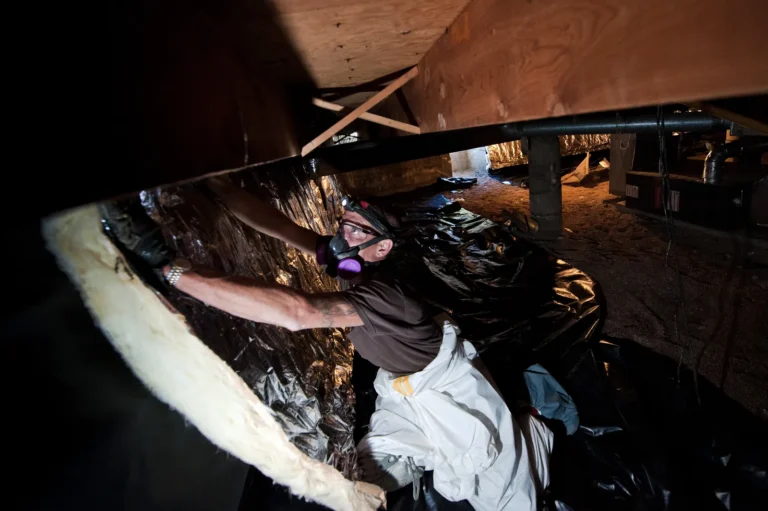

Crawl space encapsulation is a moisture- and air-control strategy that turns a dirt-floor, outdoor-vented underfloor into a cleaner, more sealed buffer—or into a conditioned space continuous with the house. In practice it usually means a continuous ground liner, sealed foundation vents and access, attention to drainage, and a plan for drying the air once the space is closed. It is not a plastic sheet alone, and it is not right for every house—especially not before bulk water, combustion, flood openings, mold, and structural issues are handled.
Here is a plain-language definition, how encapsulation differs from related terms, the main system parts, and where to go next for cost, vapor barriers, humidity, dehumidifiers, and when not to encapsulate. Hire licensed help for structure, combustion appliances, radon, and anything your local building department must approve.
What encapsulation means—and what it does not
Encapsulation (also called a closed or sealed crawl space when vents are closed and the enclosure is tightened) is a package of measures that:
- Separates the crawl space from soil moisture and many soil gases with a durable ground cover (vapor retarder).
- Reduces outdoor air exchange through foundation vents and other leaks.
- Manages liquid water with grading, gutters, drains, and sometimes a sump.
- Controls humidity in the closed space with mechanical drying (a dehumidifier) or conditioned air from the house heating and cooling system—because sealing without drying often traps moisture.
Encapsulation is not:
- A single thin plastic sheet over dirt with vents left open. That is closer to a basic ground vapor barrier—see the Crawl Space Vapor Barrier Guide.
- A guarantee against mold, pests, radon, or flooding.
- A repair for sagging floors, failed piers, or active foundation movement. Hire a licensed structural professional for those.
- A reason to permanently block required flood openings in Special Flood Hazard Areas. The Federal Emergency Management Agency’s National Flood Insurance Program guidance on flood openings still applies.
Dealers often sell “encapsulation” as a branded product. Building-science and energy programs talk more about closed, unvented, or conditioned crawl spaces. The physical goals overlap; the words differ. CrawlSpacePedia uses encapsulation as the homeowner search term and maps it to those ideas below.
Encapsulation vs vapor barrier vs closed crawl
Quotes mix these terms. Use this glossary when you read a proposal.
| Term | What it usually means | How it relates to encapsulation |
|---|---|---|
| Ground vapor barrier or vapor retarder | Plastic (or other Class I material) over soil or slab to limit ground moisture and some soil gases | A core part of encapsulation, but not the whole system. For liner specs, see the Crawl Space Vapor Barrier Guide. |
| Closed or sealed crawl space | Foundation vents sealed; air leakage reduced; ground and often walls covered | Common description of an encapsulated crawl. |
| Unvented crawl space | A code and design path that allows omitting traditional foundation ventilation when other conditions are met | Related legal framing. International Residential Code pathways for unvented crawls have evolved; Building America research helped shape later conditioned-crawl provisions. Confirm the edition your town adopts. |
| Conditioned crawl space | Crawl treated as (or connected to) conditioned building volume—supply air, return path, or equivalent drying | A performance target often paired with wall insulation and sealed vents. |
| Encapsulation | Homeowner or contractor label for a closed-crawl package: liner, sealing, drainage plan, mechanical drying, sometimes wall insulation | Umbrella term. What’s included varies by bid—get a written scope. See the Crawl Space Encapsulation Cost Guide. |
As a rule of thumb, a vapor barrier on dirt with open vents is not full encapsulation. Sealed vents with no liner and no drying plan are also incomplete. Ask every bidder which of the rows above they are actually delivering.
Why moisture is the core problem
Crawl spaces sit over soil that evaporates moisture into the underfloor air. Outdoor air through foundation vents can be more humid than the crawl in many U.S. climates—especially the humid Southeast—so the old “vent to dry” idea often fails there. Moisture then loads wood framing, insulation, and ductwork, and can move into living space through floor leaks and stack effect.
The U.S. Environmental Protection Agency’s mold guidance for indoor conditions recommends keeping indoor relative humidity below 60% and ideally between 30% and 50%, and drying wet materials within 24 to 48 hours when possible. Those figures are whole-house indoor guidance, not a crawl-space-only code rule.
For crawl spaces specifically, the Building America Solution Center’s homeowner guidance treats wood moisture content above about 18%, and crawl air above about 70% relative humidity, as concerning—and recommends checking after significant rain in spring or fall. Sealed-crawl targets used in practice (often near 50% relative humidity with a dehumidifier) are practice guidance, not EPA crawl-space law. For the full humidity sequence, see Crawl Space Humidity and Moisture Control.
The EPA also recommends putting plastic over dirt in crawl spaces to limit ground moisture. Encapsulation builds on that idea and adds enclosure and drying.
Fix bulk liquid water first. Standing water, yard drainage toward the foundation, and downspouts dumping at the wall must be corrected before you cover everything with liner—otherwise water can pond on top of the plastic. For drainage help, see the Crawl Space Drainage and Waterproofing Guide.
Core system components
Packages differ. A complete encapsulation conversation usually covers the following.
Ground liner or vapor retarder
The U.S. Department of Energy weatherization job aid on installing or repairing a crawl space vapor retarder aligns with Standard Work Specifications and calls for, among other points:
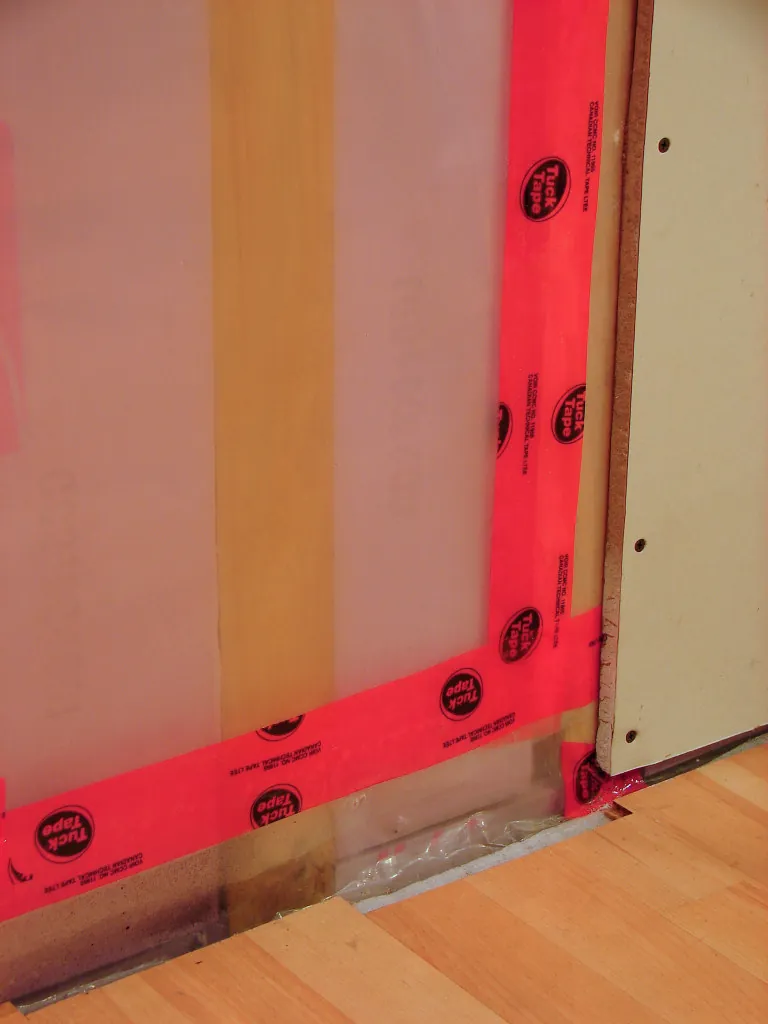
- Minimum 6-mil ground vapor retarder with a perm rating of 0.1 or less
- Coverage as close to 100% as practical
- Extension at least 6 inches up walls, piers, and columns, securely attached
- Seam overlaps of at least 12 inches (reverse or upslope lap)
- Sealed seams and penetrations with compatible durable sealant—required for unvented crawls; confirm vented versus unvented detailing
Many commercial jobs use thicker reinforced liners (for example 10–20 mil class products). Thickness above 6 mil is a durability and puncture tradeoff, not a substitute for detailing. For material and mil guidance, see the Crawl Space Vapor Barrier Guide. To estimate liner area, measure length times width, add wall upturn strips, and allow for seam overlaps—then check your roll widths.
Building Science Education and Building America basics also describe a capillary break and ground cover for crawlspace floors.
Wall coverage and air sealing
Closed-crawl practice typically seals foundation vents with insulated plugs or covers, weatherstrips the access hatch, and reduces other air leaks so outdoor humidity and pests cannot freely exchange. ENERGY STAR’s basement and crawlspace materials treat sealing and detailing as design steps, not afterthoughts.
Air sealing without a drying plan is a common failure mode—see mechanical drying below and When Not to Encapsulate a Crawl Space.
Drainage and sump when needed
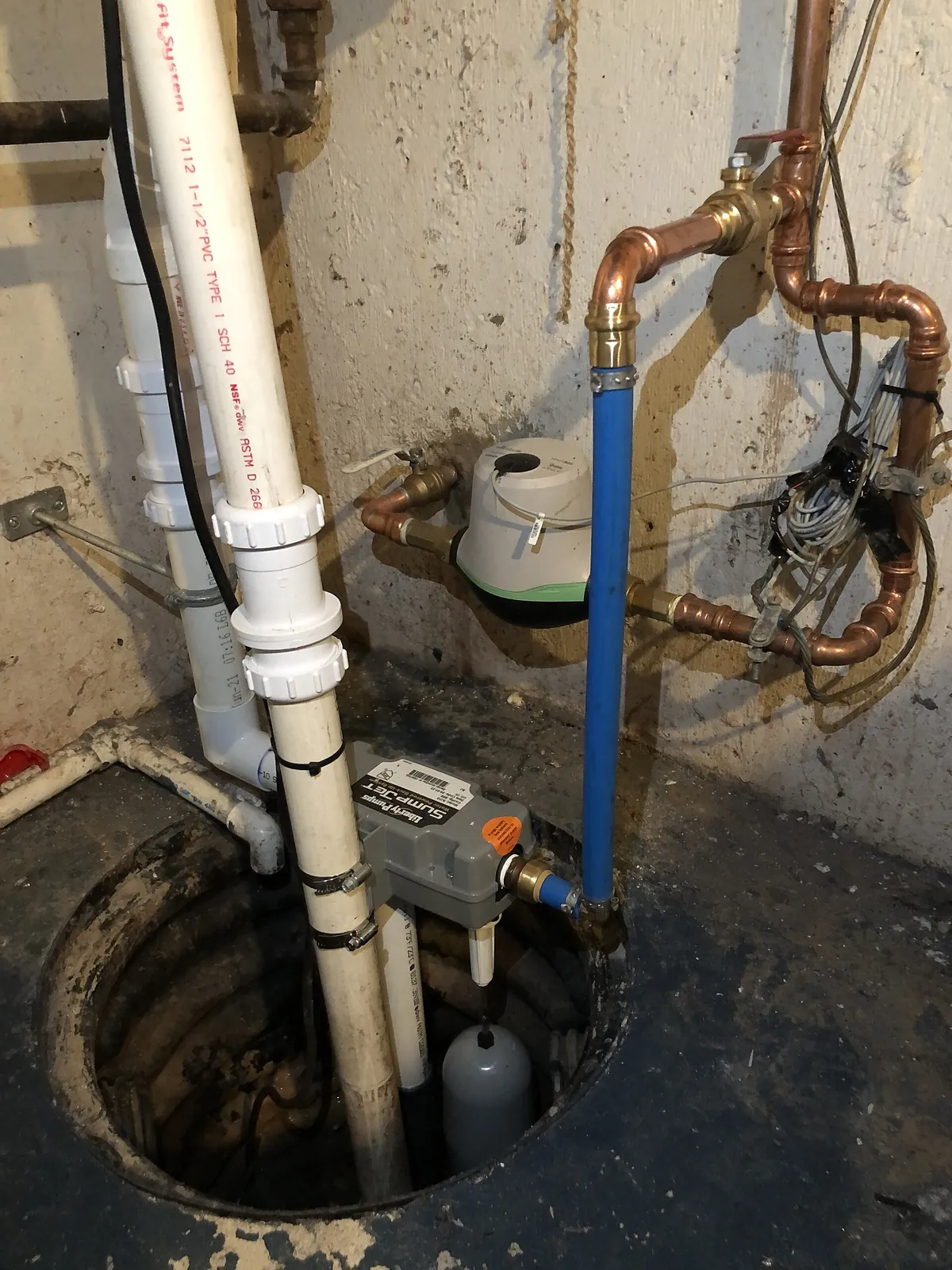
Encapsulation does not replace exterior water management. Grading, sealing, sumps, and vapor-barrier detailing belong together. Interior drains and a sump are common when groundwater or washout risk remains after exterior fixes. For sump install and replacement cost, see Crawl Space Sump Pump Cost. For standing-water troubleshooting, see Water in the Crawl Space: Causes and Fixes.
Mechanical drying
Once vents are sealed, the crawl no longer “breathes” outdoor air the old way. Closed-crawl programs treat controlled drying—a crawl-space dehumidifier or conditioned air from the house—as part of the system, not an optional upgrade. ENERGY STAR materials and related Building America guides emphasize closed, conditioned approaches rather than sealing and walking away.
For choosing a dehumidifier—capacity, sealed versus leaky load, and drainage—see the Crawl Space Dehumidifier Guide. If you still have standing water or open vents, fix those first. Capacity ratings alone will not solve them.
Insulation location
Where insulation belongs depends on whether the crawl is vented or closed and conditioned. Closed and conditioned designs often move insulation to foundation walls (with termite inspection gaps where required) rather than leaving batts in the floor that sag in humid air. For the comparison, see Insulate Crawl Space Walls or Floor?.
Climate notes
| Climate | Typical encapsulation relevance | Caveat |
|---|---|---|
| Humid (for example, much of the Southeast) | Strong case for closed crawls: outdoor vent air can add moisture; Building America research highlighted humidity and energy benefits of unvented conditioned crawls | Still fix bulk water and combustion or flood issues first |
| Mixed-humid or temperate | Case-by-case; ducts in the crawl and floor leaks raise the value of bringing the crawl inside the enclosure | Verify local code pathway and drying method |
| Hot-dry or arid | Vented crawls sometimes perform adequately on moisture alone; encapsulation may still help pest control, ducts, and comfort | Do not assume “always encapsulate” |
| Cold or very cold | Conditioned or insulated-wall approaches need careful detailing (ground temperature, wall R-value, fire covering of foam, radon) | Floor comfort and ground heat sink deserve design attention |
Climate does not override flood openings, atmospheric combustion limits, or standing water.
Benefits homeowners often seek
Well-executed closed and conditioned crawls can deliver:
- Lower heating and cooling energy use when the crawl is brought inside the thermal enclosure. The Department of Energy’s Building America Top Innovation profile states that Building America research demonstrated 15% to 18% less energy for heating and cooling for unvented, conditioned crawlspaces versus traditional vented practice in the studied contexts, while reducing humidity over 20%. Those percentages are research results—not a promise for every house or climate.
- Less moisture load on wood, insulation, and ducts when bulk water is controlled and the space is dried.
- A cleaner underfloor environment and fewer outdoor air, pest, and soil-gas pathways when detailing is careful. Radon still needs its own plan.
- Warmer floors in some closed, insulated-wall designs—when the enclosure and conditioning actually work.
Encapsulation is not magic. Poor drainage, skipped drying, atmospheric combustion left unaddressed, or sealed-over mold can make conditions worse.
Limits and failure modes
Do not treat encapsulation as the first step when any of the following apply. For the full decision guide, see When Not to Encapsulate a Crawl Space.
- Standing water or unresolved bulk water. Fix grading, gutters, exterior drainage, and interior collection first; do not trap water on top of the liner.
- Required flood openings. In Special Flood Hazard Areas, flood openings in foundation walls and enclosure walls below elevated buildings are a separate requirement. Permanently sealing required openings can create a bathtub under the house. Confirm with your floodplain administrator.
- Atmospheric combustion appliances in the crawl. Sealing reduces available combustion air and can create dangerous pressure or exhaust interactions. One volume-based method discussed for enclosed spaces is on the order of 50 cubic feet of volume per 1,000 BTU per hour—verify against the code edition your local building authority adopted, and consider sealed-combustion or electric equipment replacements.
- Active mold or sewage. See Crawl Space Mold: What Homeowners Should Do. Large remediation is for qualified professionals.
- Structural distress. Sagging floors, crushed piers, major cracks: structural pro first.
- Radon. Sealing can change soil-gas pathways. Test before and after major sealing; mitigation may be needed.
Safety before you enter or seal
- Wear protective gear suited to a dirty, possibly contaminated space—coveralls with a hood, a properly fitted respirator and eye protection, gloves, a headlamp. Do not enter alone if you can avoid it; tell someone you are going under.
- Treat electrical hazards in damp spaces seriously.
- If you smell gas, see rusted flues, or have open-combustion equipment below, stop and call a qualified heating or combustion technician before sealing.
- For structural repairs, mold contamination, combustion evaluation, radon mitigation, or floodplain compliance, use qualified licensed professionals and your local building department.
Process overview
For the ordered walkthrough, see Crawl Space Encapsulation Process: Step by Step. In broad strokes:
- Inspect and document — moisture readings, photos, combustion inventory, flood-zone status, radon test plan.
- Fix bulk water — exterior first, then interior drains and a sump as needed. See the Crawl Space Drainage and Waterproofing Guide and Water in the Crawl Space: Causes and Fixes.
- Clean and remediate — debris, pests, mold within a professional’s job scope. See Crawl Space Mold: What Homeowners Should Do.
- Address combustion, radon, and flood openings — redesign or leave openings as required.
- Install liner and seals — ground cover detailing, vent seals, access weatherstrip. See the Crawl Space Vapor Barrier Guide.
- Insulate per design — usually walls for closed and conditioned; follow fire and termite rules. See Insulate Crawl Space Walls or Floor?
- Commission drying — dehumidifier or conditioned air; verify humidity trends. See the Crawl Space Dehumidifier Guide.
- Maintain — check after storms; service the dehumidifier; re-inspect seals yearly.
DIY vs professional
Capable DIYers sometimes install ground poly and seal vents on small, dry, non-flood, non-combustion crawls—and still get humidity wrong without a dehumidifier and monitoring. Combustion, floodplain, structural, electrical, and mold remediation work are not DIY-first topics. Professional bids should itemize liner mil and coverage, wall treatment, vent sealing, drainage, dehumidifier brand and capacity, insulation location, warranties, and exclusions. Compare what is included, not just totals—see the Crawl Space Encapsulation Cost Guide and How to Hire and Compare Crawl Space Contractors.
Cost
Encapsulation projects are often multi-thousand dollars in U.S. consumer cost guides, but the number on a bid depends entirely on what is included (barrier-only versus a sealed system with drying and drainage). For published national ranges and a side-by-side comparison of job packages, see the Crawl Space Encapsulation Cost Guide.
Next steps
- Confirm you are a candidate—or are not—via When Not to Encapsulate a Crawl Space.
- To understand humidity and how to measure it, see Crawl Space Humidity and Moisture Control.
- To spec the liner correctly, see the Crawl Space Vapor Barrier Guide.
- To plan mechanical drying, see the Crawl Space Dehumidifier Guide.
- Compare costs and what each bid includes: Crawl Space Encapsulation Cost Guide.
- Read closed-crawl design primers from ENERGY STAR and Advanced Energy (linked in Sources) before signing a large contract.
Sources
- U.S. Department of Energy — Unvented, Conditioned Crawlspaces – Building America Top Innovation.
- U.S. Department of Energy — Install or Repair a Crawl Space Vapor Retarder.
- ENERGY STAR — Basement & Crawlspace hub (closed-crawl document list).
- ENERGY STAR asset — Designing Closed Crawlspaces.
- Building America / IBACOS — Guide to Closing and Conditioning Ventilated Crawlspaces.
- Building Science Corporation (BSC) — BA-0401 — Conditioned Crawlspace Construction, Performance and Codes.
- Building America Solution Center — Look at the Crawlspace for Moisture Issues.
- Building America Solution Center — Water Management for an Existing Crawlspace Floor.
- Building America Solution Center / BSES — Capillary Break at Crawlspace Floors.
- Advanced Energy — Crawl Spaces hub.
- U.S. EPA — A Brief Guide to Mold, Moisture and Your Home.
- U.S. EPA — What Are the Main Ways to Control Moisture in Your Home?.
- U.S. EPA — Mold Course Chapter 2 (crawl spaces).
- FEMA — NFIP Technical Bulletin 1 (March 2020) — (alternate:.
- Energy Vanguard — Allison Bailes, — Should You Encapsulate Your Crawl Space?.
- NC State Extension — Mold and Moisture Checklist.
- HomeAdvisor — Crawl space encapsulation cost (;)
- This Old House — Crawl space encapsulation cost
- Fixr — Crawl space repair costs incl. encapsulation bands
Image credits
- ‘Worker installing a moisture barrier and insulation in a residential crawl space’: U.S. Department of Energy / National Renewable Energy Laboratory (NREL) (Dennis Schroeder) / Wikimedia Commons, public domain, resized and converted to WebP.
- ‘Six-mil polyethylene sheet used as a vapor barrier’ by P199 via Wikimedia Commons, CC0 1.0 (public domain dedication), resized and converted to WebP.
- ‘Newly installed sump pump in a residential basin’ by Famartin via Wikimedia Commons, CC BY-SA 4.0, resized and converted to WebP.
The bottom line
Encapsulation is a system: ground vapor retarder, sealed enclosure, water management, and mechanical drying or conditioning—executed only after bulk water, combustion, flood openings, mold, structural, and radon issues are honestly assessed. Start with definitions and preconditions here, then use When Not to Encapsulate a Crawl Space, Crawl Space Vapor Barrier Guide, Crawl Space Humidity and Moisture Control, Crawl Space Dehumidifier Guide, and Crawl Space Encapsulation Cost Guide for the next decisions. Verify every code-sensitive step with your local authority having jurisdiction.