
When Not to Encapsulate a Crawl Space
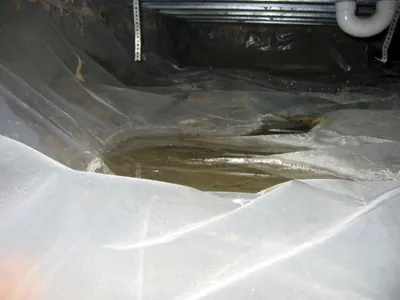

Crawl space encapsulation seals foundation vents, covers the ground (and often walls) with a vapor retarder, and usually adds mechanical drying. It is a system—not a plastic wrap you drop over problems. This walkthrough explains when sealing is premature or inappropriate, why, and what to fix first.
It goes deeper than the short failure-mode notes in Crawl Space Encapsulation Guide and is not a humidity symptom encyclopedia (Crawl Space Humidity and Moisture Control) or a full drainage design guide (Crawl Space Drainage and Waterproofing Guide). If you already have standing water, start with Water in the Crawl Space: Causes and Fixes.
Quick answer: do not encapsulate yet if…
Educational synthesis for homeowner triage—not a certified diagnosis, floodplain determination, or code inspection; pause DIY sealing when combustion, flood openings, sewage, or structure are involved.
| Stop condition | Why sealing now is risky | What to fix next |
|---|---|---|
| Standing or recurring liquid water | Liner can trap water on top of plastic—“bathtub” under the house | Control water first see Water in the Crawl Space: Causes and Fixes, Crawl Space Drainage and Waterproofing Guide |
| Required flood openings (Special Flood Hazard Area (SFHA) or local building authority) | Sealed air vents are not a substitute for flood openings that equalize hydrostatic pressure | Keep compliant openings; redesign only with floodplain-aware pros then Federal Emergency Management Agency (FEMA) National Flood Insurance Program (NFIP) TB-1; Vented vs Unvented Crawl Space |
| Atmospheric or open-combustion appliances in the crawl | Sealing cuts outdoor combustion air; backdrafting or carbon monoxide (CO) risk | Upgrade to direct-vent or sealed-combustion or electric before sealing then Building America Solution Center (BASC) pre-retrofit |
| Active sewage, heavy mold, or soft or rotted structure | Encapsulation does not remediate contamination or failed framing | Remediate and repair first see Crawl Space Mold: What Homeowners Should Do, Crawl Space Structural Warning Signs (incl. sagging floors) |
| No drying plan after vents are sealed | Closed crawls need dehumidifier or conditioned or supply air | Plan drying see Crawl Space Dehumidifier Guide |
| No ground cover or drainage basics | Closing vents over bare wet soil often worsens moisture | Barrier + water control see Crawl Space Vapor Barrier Guide, Crawl Space Drainage and Waterproofing Guide |
Standing water and bulk water (fix first)
Building-science writers and Building America Solution Center (BASC) water-management guidance agree on the order: reduce bulk water intrusion, then detail the floor—not the reverse.
Energy Vanguard’s encapsulation decision article (Oct 18, 2022) treats standing water as the first red flag: covering bulk water with plastic can leave water on top of the liner. That does not mean a wet crawl can never be encapsulated later—it means solve the water path first (yard grade, downspouts, plumbing, foundation drainage), then encapsulate.
The Building America Solution Center guide Water Management of Existing Crawlspace Floor starts with re-grading, exterior footing drains to daylight or drywell, and gutters and downspouts that carry roof water away—before sump and vapor-barrier detailing.
Advanced Energy’s closed-crawl manual similarly lists protecting the crawl from water sources (roof runoff, irrigation, low vents that admit rain, foundation drainage, plumbing leaks, interior drains and a sump) as early conversion steps—before treating vent sealing as the main event.
Do this instead of sealing now: diagnose and stop the source (Water in the Crawl Space: Causes and Fixes); design lasting drainage (Crawl Space Drainage and Waterproofing Guide); only then return to Crawl Space Encapsulation Guide or Crawl Space Vapor Barrier Guide.
Required flood openings (not the same as air vents)
In flood-prone locations, local rules may require flood openings so water can enter and exit the crawl and equalize hydrostatic pressure on foundation walls. The Building America Solution Center guide Flood-Resistant Crawlspace Foundations explains that water levels inside should rise and fall with outside water; ordinary foundation air vents—especially high on the wall, closable, or clogged with pest screens—are not automatically valid flood openings.
ENERGY STAR–hosted Advanced Energy Designing Closed Crawlspaces notes flood vents that minimize standby air leakage when required, and states no open foundation vents for closed designs—while still pointing to flood vents per local residential code where required.
The Federal Emergency Management Agency’s National Flood Insurance Program Technical Bulletin 1 (March 2020) is the national flood-opening technical reference this site uses for homeowner orientation—not a substitute for your floodplain administrator or design professional. Standard foundation air vents are generally not acceptable flood openings unless they meet TB-1 criteria (including remaining permanently open where that is the compliance path)—confirm with your floodplain official.
Stop here if your home must maintain flood openings — do not “encapsulate” by blanking every opening without a compliant flood-opening strategy. Energy Vanguard’s article likewise warns that encapsulating in a flood zone with required flood vents can leave a sealed pool after a flood.
For more on vent types, see Vented vs Unvented Crawl Space.
Atmospheric combustion appliances in the crawl
If a fuel-fired furnace, water heater, or similar appliance in the crawl draws combustion air from the surrounding space (natural-draft or open-combustion or Category I style), sealing foundation vents removes the outdoor air path that appliance may have been relying on.
The Building America Solution Center’s Pre-Retrofit Assessment of Crawlspaces and Basements says to determine venting and combustion-air sources before air-sealing the crawl; preferred path is replace natural-draft equipment with sealed-combustion or direct-vent appliances or electric heat pump or heat-pump water heater options.
ENERGY STAR Designing Closed Crawlspaces: fuel-fired appliances in a closed crawl should be direct vent or two-pipe (combustion air from outdoors; exhaust sealed outdoors).
Advanced Energy’s closed-crawl manual echoes combustion-safety themes for conversions (do not simply close vents around unsafe equipment).
Optional secondary illustration (not CrawlSpacePedia code law): Energy Vanguard summarizes one 2018 International Residential Code (IRC) combustion-air volume method (e.g. 50 cubic feet of volume per 1,000 Btu per hour) as an example of why a short crawl may not provide enough volume for an atmospheric furnace after sealing. Treat that as that article’s secondary walkthrough of a named edition—confirm the edition your local building authority adopted and have a heating, ventilation, and air conditioning (HVAC) professional or building official decide. CrawlSpacePedia does not quote IRC primary text from the International Code Council (ICC) and does not invent National Fuel Gas Code article numbers here.
Treat this as a stop — Identify appliance type. If open-combustion equipment remains, upgrade or relocate combustion strategy before encapsulation.
Active mold, sewage, or structural damage
Encapsulation is not mold remediation, sewage cleanup, or structural repair.
- Sewage or contaminated water: leave; call appropriate remediation—do not crawl through it to hang poly.
- Extensive mold or fungal growth on framing. BASC DIY inspection notes treat extensive growth and moisture damage as a reason for professional assessment before “pretty” liners. In more detail, Crawl Space Mold: What Homeowners Should Do.
- Soft joists, failed piers, major cracks: structural evaluation first then Crawl Space Structural Warning Signs (incl. sagging floors).
Surface cleanup of limited growth after moisture is controlled may appear in closed-crawl prep sequences (e.g. Advanced Energy closed-crawl materials)—that is not a license to seal over active leaks or failed wood.
No mechanical drying plan after sealing
Closed and sealed crawls are designed with a mechanical drying system—dehumidifier or supply of conditioned air—not hope that sealed vents alone dry the space. ENERGY STAR Designing Closed Crawlspaces and Advanced Energy’s manual both treat drying as a package element. Advanced Energy sample designs include permanently installed dehumidifiers (example minimum 15 pint per day capacity in that manual) or other drying methods, with condensate piped per local code and a dedicated, non-switched, ground-fault circuit interrupter (GFCI)-protected outlet recommended in that guidance—still confirm electrical details with an electrician or local building authority.
Humidity targets are not a bare “set to 50%” CrawlSpacePedia law. Practical anchors (see Crawl Space Humidity and Moisture Control or Crawl Space Dehumidifier Guide): stay below BASC’s crawl inspection concern of air relative humidity (RH) above ~70%; Advanced Energy design language typically 70% RH or lower; ENERGY STAR’s 30–50% band is whole-building or product guidance, not crawl statute; Princeville field results in the Advanced Energy manual showed wall-vented crawls exceeding 80% RH much of spring and summer while closed designs held below 65% in that period.
Treat this as a stop — If the quote only covers plastic and vent covers with no drained dehumidifier or supply-air plan, it is not a complete closed-crawl system—see Crawl Space Dehumidifier Guide and Crawl Space Encapsulation Cost Guide.
Missing ground cover or drainage basics
Closing vents over bare soil, torn poly, or chronic seepage is a common failure mode. BASC DIY crawl-moisture guidance and the U.S. Department of Energy (DOE) weatherization job aid Install or Repair a Crawl Space Vapor Retarder support covering dirt crawl floors with a ground vapor retarder; the DOE job aid specifies ≥6-mil, perm ≤0.1, coverage and upturn and overlap details (including the unvented-only seam-seal checklist caveat)—see Crawl Space Vapor Barrier Guide for install details rather than repeating capillary-break or closed-crawl brand guides here.
Drainage and waterproofing concepts belong in Crawl Space Drainage and Waterproofing Guide. Encapsulation without water management is how projects become indoor pools.
Climate nuance (high level)
A carefully built vented crawl with excellent drainage and ground cover can perform acceptably in some dry climates; humid climates often see open vents import moisture (DOE Foundations Handbook vented vs unvented discussion; Advanced Energy Princeville results). That is not a universal “always seal” or “never seal” rule—see comparison Vented vs Unvented Crawl Space and stop conditions above (flood, combustion, water).
Decision checklist
- No standing water; bulk sources identified and controlled
- On flood openings: not required, or compliant strategy documented with your local building authority or a floodplain pro
- Combustion appliances: none in crawl, or direct-vent or sealed-combustion and electric plan signed off
- Mold and sewage or structure: remediated or cleared by qualified parties
- Ground vapor retarder plan meets program and spec (Crawl Space Vapor Barrier Guide).
- Drainage and a sump as site needs (Crawl Space Drainage and Waterproofing Guide)
- Mechanical drying specified and drained (Crawl Space Dehumidifier Guide).
- Quote lists exclusions (flood, radon, structural) honestly (Crawl Space Encapsulation Cost Guide).
- Radon testing considered (U.S. Environmental Protection Agency (EPA) radon resources)—encapsulation is not automatic radon mitigation
If any box fails, do not encapsulate yet.
When encapsulation is appropriate (short)
After water control, combustion or flood constraints, and a drying plan are honest: a closed crawl with sealed vapor retarder, air sealing, and mechanical drying can outperform wall-vented crawls for moisture in humid climates (Advanced Energy or ENERGY STAR closed-crawl materials). For the system definition, see Crawl Space Encapsulation Guide. On costs, Crawl Space Encapsulation Cost Guide.
Safety or when to call a pro
- Standing water near electrical wiring or panels
- Suspected sewage
- Fuel-fired equipment changes
- Floodplain or insurance compliance
- Structural damage or extensive mold
- Confined-space entry (personal protective equipment (PPE); do not work alone if avoidable—BASC DIY)
Educational only—not engineering, code approval, or medical advice.
Sources
- Building America Solution Center — Pre-Retrofit Assessment of Crawlspaces and Basements
- Building America Solution Center — Flood-Resistant Crawlspace Foundations
- Building America Solution Center — Water Management of Existing Crawlspace Floor
- ENERGY STAR asset — Designing Closed Crawlspaces
- Advanced Energy — Closed crawl spaces manual (Princeville humidity results; water-source steps; combustion and direct-vent themes; dehumidifier examples)
- FEMA — NFIP Technical Bulletin 1 (March 2020)
- Energy Vanguard — Should You Encapsulate Your Crawl Space?
- U.S. EPA — Radon
- Building America Solution Center — Look at the Crawlspace for Moisture Issues
- U.S. Department of Energy — Install or Repair a Crawl Space Vapor Retarder
- U.S. Department of Energy / Oak Ridge National Laboratory — Building Foundations Handbook
- Oak Ridge National Laboratory — Building Foundations Handbook (vented foundations section)
Image credits
- ‘Pooled water under plastic sheeting in a crawl space’: U.S. Environmental Protection Agency / Wikimedia Commons, public domain, resized and converted to WebP.
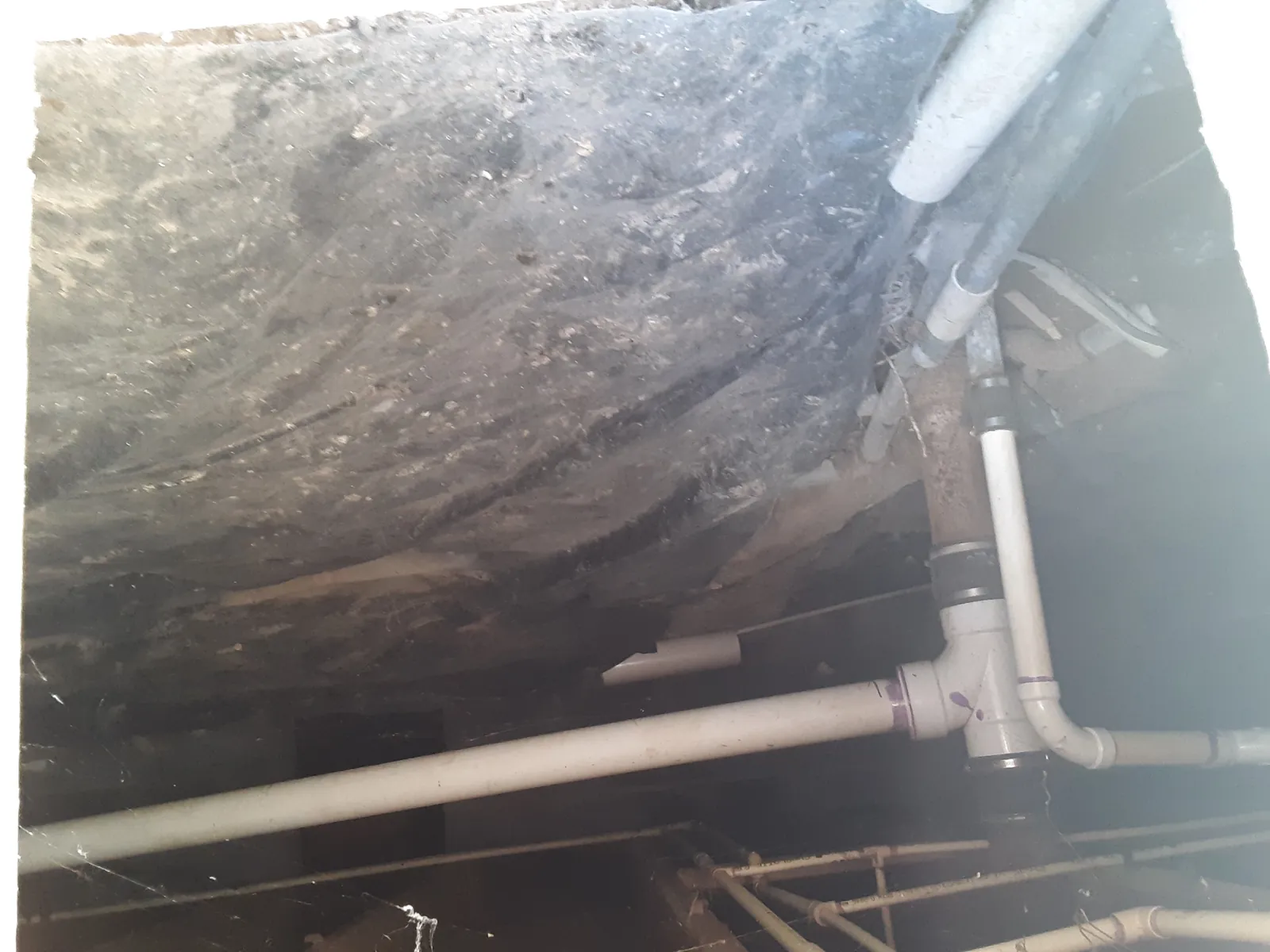
- ‘Crawl space with a vapor barrier partly covering the dirt floor’ by TradeCrawlspaces via Wikimedia Commons, CC BY-SA 4.0, resized and converted to WebP.
The bottom line
Skip encapsulation when liquid water, required flood openings, open combustion, active contamination and structure failure, or a missing drying plan still apply. Fix those first, then use Crawl Space Encapsulation Guide for the system, Crawl Space Vapor Barrier Guide for the liner, Crawl Space Dehumidifier Guide for drying, and Crawl Space Encapsulation Cost Guide for scoped costs.