
Crawl Space Encapsulation Cost: Sourced US Ranges

Published U.S. consumer guides usually place crawl space encapsulation cost in a multi-thousand-dollar band—often roughly $1,500–$15,000 depending on how each publisher defines the job—with several sources citing a national average near $5,500. Those figures are published national ranges, not CrawlSpacePedia surveys and not local bids. Here you get named sources side by side, explains what different job packages include, lists cost drivers without invented unit rates, and gives a quote checklist.
For the system definition and when not to encapsulate, see the Crawl Space Encapsulation Guide and When Not to Encapsulate a Crawl Space. For liner detail, see the Crawl Space Vapor Barrier Guide. For dehumidifiers, see the Crawl Space Dehumidifier Guide.
Quick answer: published national ranges
Geography is each publisher’s stated frame—typically U.S. national data. Read each figure with its publisher, date, and region. Do not average them: barrier-only work is not the same job as a sealed crawl with drying and drainage.
| Source | Headline range or average (as stated) | Per sq ft (if stated) | Publisher update or data label | Notes |
|---|---|---|---|---|
| HomeAdvisor | Avg ~$5,500; most $5,000–$15,000 | Basic $2–$4; extensive $3–$10 | Updated Jun 20, 2026 (page also uses “[2025 Data]” or “2026” framing) | Size examples on-page (e.g. 2,000 sq ft $2,000–$10,000). Sister brand of Angi under Angi Inc.—see How we researched this. |
| Angi | “In 2026” national avg $5,500; most $5,000–$15,000 | Basic $2–$4; extensive $3–$10 | Updated Oct 28, 2026; “[2026 Data]” | Sister brand of HomeAdvisor under Angi Inc.; near-identical headline bands—related cost guides, not independent surveys. Size-by-sq-ft table breakpoints differ from HomeAdvisor. |
| This Old House | Avg ~$5,500; $1,500–$15,000 | Basic $3–$7; up to ~$10 | Updated 03/13/2026 | Labor often 50%–70% of total; FAQ cites ~$3,000–$7,000 for 1,000 sq ft. |
| Fixr | Encapsulation $2,000–$15,000 | $2–$6 | Updated Jan 31, 2025 | Inside a broader crawl-space repair article. Text lists liner, sealing, sump, dehumidifier for more complete encapsulation. |
If several publishers print ~$5,500, that often reflects related cost guides (and HomeAdvisor and Angi are sister brands), not proof your house costs $5,500.
Barrier-only vs full encapsulation
| Package | Typical inclusions | Typical exclusions |
|---|---|---|
| A — Barrier-only | Ground vapor retarder; maybe taped seams | Open vents; no dehumidifier; little wall coverage |
| B — Liner + sealed vents | Ground liner + vent covers + access weatherstrip | May omit mechanical drying or drains |
| C — Full + dehumidifier | B + powered, drained crawl dehumidifier | May omit sump if site assumed dry |
| D — Full + dehumidifier + drainage | C + interior drain or sump (+ exterior water work as needed) | Structural, heavy mold, flood-opening redesign still separate |
Marketing “encapsulation” while delivering only a ground barrier (package A) is a common quote mismatch. Sealing without drying or water control can worsen conditions—see When Not to Encapsulate a Crawl Space.
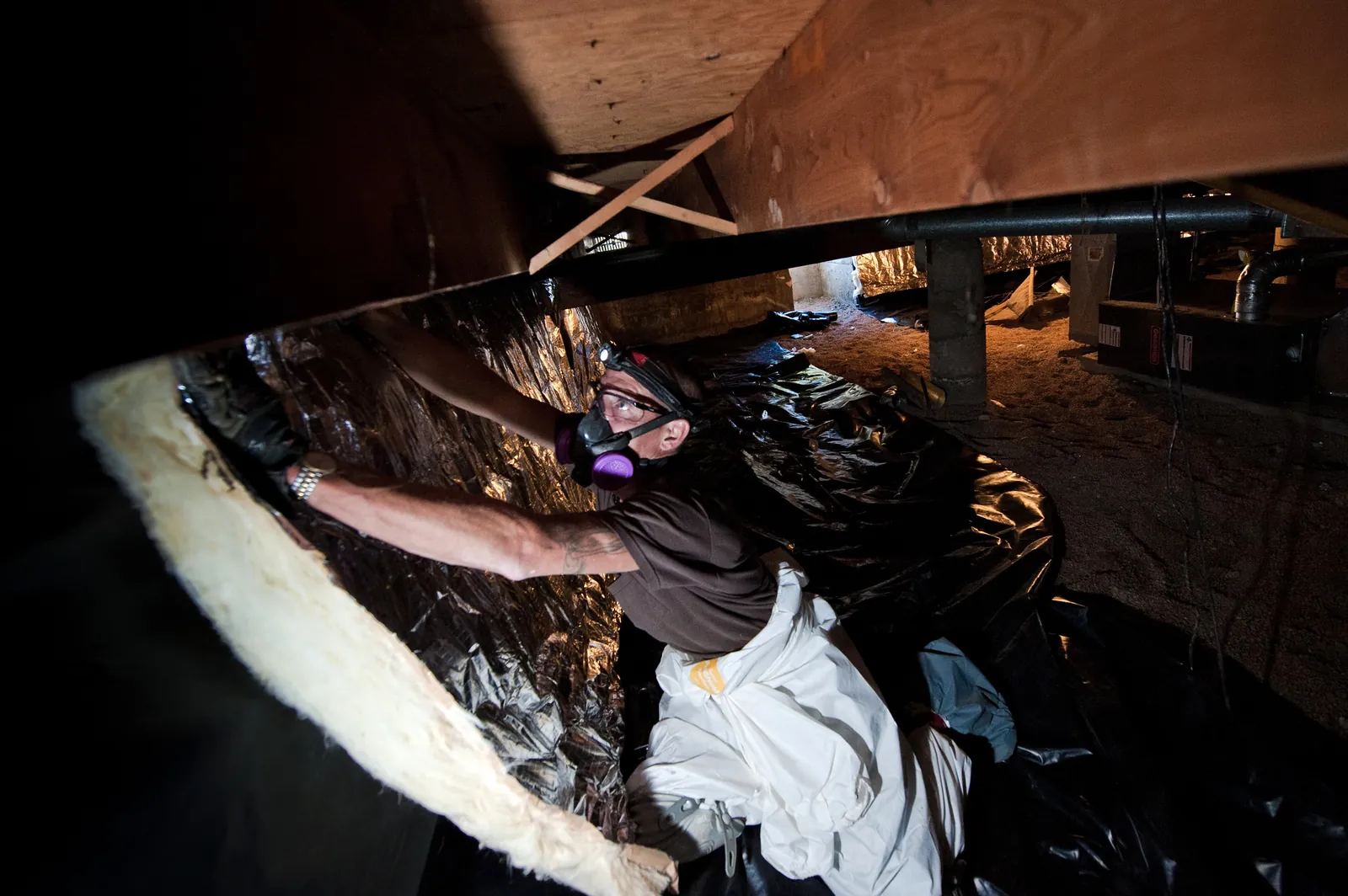
The U.S. Department of Energy weatherization job aid on crawl space vapor retarders is about how to detail a liner, not a price. It calls for at least 6-mil material, a perm rating of 0.1 or less, at least 6-inch upturns, and at least 12-inch overlaps. Sealing seams and penetrations with durable sealant applies to unvented crawl spaces; confirm vented versus unvented detailing before treating full seam sealing as universal. See the Crawl Space Vapor Barrier Guide.
How these cost figures compare
Publishers rarely list package totals for barrier-only (A), liner plus vents (B), or full plus drainage (D). Empty or partial cells mean the source did not list that combined total—not that the work is free. CrawlSpacePedia does not invent missing numbers or average publishers together.
| Package | HomeAdvisor (updated Jun 20, 2026) | Angi (updated Oct 28, 2026) | This Old House (updated Mar 13, 2026) | Fixr (updated Jan 31, 2025) |
|---|---|---|---|---|
| A — Barrier-only | 20-mil vapor barrier material $0.50 to $0.70 per sq ft (not a full install total). | 20-mil vapor barrier $0.50 to $0.70 per sq ft. | Barrier material by thickness (thinner ~$0.05 to $0.20 per sq ft; thicker ~$0.40 to $0.60 per sq ft) plus tape $18–$50—not a complete job total. | Closest: replace vapor barrier $1,500–$4,000 (labor included; ~1,500 sq ft framing in their tables). |
| B — Liner + sealed vents | DIY vent covers $15–$22; pro $40 to $50 per cover. Combined package total not listed. | DIY $15 to $22 per cover; pro $40 to $50 per vent. Package total not listed. | Vent sealing ~$10 to $22 per vent (plus hatch bands in some copy). Package total not listed. | “Seal” $500–$4,000; vents $50 to $200 per vent in a repair write-up. Clean “liner + vents only” bundle not isolated. |
| C — Full + dehumidifier | Headline encapsulation $5,000–$15,000 or ~$5,500; per sq ft $2–$4 basic or $3–$10 extensive—dehumidifier not guaranteed inside every “average.” | Same headline $5,000–$15,000 or $5,500; dehumidifier material line $800–$1,200. Inclusion in average not explicit. | Headline $1,500–$15,000 or ~$5,500; dehumidifier install often $800–$2,000; per sq ft $3–$7 (to ~$10). | Encapsulation $2,000–$15,000 or $2 to $6 per sq ft; narrative may include dehumidifier or sump—not a guaranteed bill of materials inside every dollar. |
| D — Full + dehumidifier + drainage | Waterproofing cited separately (avg ~$4,600, $1,500–$15,000)—not added into the encapsulation average. Combined D not listed. | Waterproofing avg $4,600, $1,500–$15,000; sump material bands listed. Combined D not listed. | Drainage and a sump add-on ~$600–$1,800; other prep adders separate. Combined D not listed. | Encapsulation blurb may mention sump; waterproofing $2,000–$7,000 separate. Combined D not listed. |
Cost per square foot and example math
| Publisher | Stated per sq ft | Access or update |
|---|---|---|
| HomeAdvisor | $2–$4 basic; $3–$10 extensive | Updated Jun 20, 2026 |
| Angi | $2–$4 basic; $3–$10 extensive | Updated Oct 28, 2026 |
| This Old House | $3–$7; up to ~$10 | Updated Mar 13, 2026 |
| Fixr | $2–$6 encapsulation | Updated Jan 31, 2025 |
Example scenarios (not bids)
Arithmetic using cited bands times example areas. These are not local quotes.
| Area | Fixr $2–$6 | This Old House $3–$7 | HomeAdvisor and Angi basic $2–$4 |
|---|---|---|---|
| 1,000 sq ft | $2,000–$6,000 | $3,000–$7,000 | $2,000–$4,000 |
| 1,500 sq ft | $3,000–$9,000 | $4,500–$10,500 | $3,000–$6,000 |
| 2,000 sq ft | $4,000–$12,000 | $6,000–$14,000 | $4,000–$8,000 (HomeAdvisor also shows a wider 2,000 sq ft encapsulation table $2,000–$10,000) |
Mold, structural, or full drainage work push totals above low per-sq-ft illustrations.
What drives price
No invented labor or material rates. Drivers to map onto quotes:
- Square footage — guides scale with size.
- Height, access, debris — raises labor (This Old House, HomeAdvisor, and Angi often put labor at about 50%–70% of total).
- Liner mil and wall coverage — thicker commercial liners and full upturns cost more than thin ground-only poly.
- Vent and air-seal quantity — more openings mean more covers (publisher vent-cover bands above).
- Drainage and sump — often separate from “liner.” See the Crawl Space Drainage and Waterproofing Guide and Crawl Space Sump Pump Cost. HomeAdvisor and Angi waterproofing averages show how large water work can be.
- Dehumidifier — equipment, drain, and outlet. See the Crawl Space Dehumidifier Guide. This Old House install $800–$2,000; Angi equipment $800–$1,200; Fixr $750–$1,700.
- Mold, pest, or cleaning prep — before sealing. See Crawl Space Mold: What Homeowners Should Do. Publisher prep bands vary; get local remediation quotes.
- Insulation type and location — see Insulate Crawl Space Walls or Floor?.
- Electrical — dedicated circuits and ground-fault protection under local rules; confirm with an electrician or your building department.
- Permits — often roughly $50–$250 on consumer cost-guide pages; jurisdiction-specific.
- Flood openings or combustion redesign — may block sealing or force equipment changes. See When Not to Encapsulate a Crawl Space and Federal Emergency Management Agency flood-opening guidance.
DIY vs professional
DIY may cut labor on barrier-only work in a dry, accessible crawl; mistakes in water, combustion, flood, or drying are costly. Big-box materials-only totals are not a fake DIY average. Pros fit drainage design, electrical, mold remediation, and warranties. For hiring tips, see How to Hire and Compare Crawl Space Contractors or the Encapsulation Quote Checklist.
Reject the cheapest bid that skips drainage, mold cleanup, or mechanical drying. Do not seal over standing water or ignore atmospheric combustion or required flood openings.
Quote-comparison checklist
- Measured square footage, height, and access
- Liner mil, wall height, pier wrap, seam products
- All vents sealed? Access weatherstripped?
- Dehumidifier model and capacity basis, drain, outlet
- Drainage and a sump included or excluded? Exterior water work?
- Insulation location and R-value; termite gap; foam ignition barrier if required
- Prep allowances (mold and pest cleaning) versus exclusions
- Electrical and plumbing allowances
- Permit responsibility
- Warranty scope (seams versus humidity performance)
- Exclusions (flood vents, radon, structural)
- Progress photos; relative humidity target labelled as a practice goal, not a fake guarantee
Compare line items, not only bottoms.
Related guides
For what encapsulation is, see the Crawl Space Encapsulation Guide. For stop conditions, see When Not to Encapsulate a Crawl Space. For liner detailing, see the Crawl Space Vapor Barrier Guide. For drying equipment, see the Crawl Space Dehumidifier Guide. For sump pricing, see Crawl Space Sump Pump Cost.
How we researched this
- Named publisher pages are re-checked on the review date, with each publisher’s update date and the geography they claim.
- Sources sit side by side—never averaged into a CrawlSpacePedia “true” cost.
- Package inclusions are separated from headline averages; missing cells stay empty instead of being filled in.
- HomeAdvisor and Angi are sister brands under Angi Inc. (Angi Inc. SEC Nature of Operations: operates under multiple brands including Angi, Angie’s List, HomeAdvisor, and Handy). Their encapsulation cost pages publish near-identical national bands and similar method notes—treat them as related cost guides, not two independent surveys that “confirm” $5,500. Their size-by-sq-ft tables differ (HomeAdvisor uses 2,000 or 2,500 or 3,000; Angi uses 1,000 and 2,000 or 3,000).
- Local bids and local building-department rules override national cost guides. Code-sensitive work depends on the edition your jurisdiction adopted.
Sources
- HomeAdvisor — crawl space encapsulation cost
- Angi — crawl space encapsulation cost [2026 Data]
- This Old House
- Fixr — crawl space repair (encapsulation section)
- Angi Inc. — Nature of Operations exhibit (multiple brands including Angi, Angie’s List, HomeAdvisor, and Handy)
- (Context only, not planning) An older Bob Vila page (updated Jul 20, 2022) repeated a similar $1,500–$15,000 / ~$5,500 band; too stale for planning—prefer 2025–2026 pages
- U.S. Department of Energy — Install or Repair a Crawl Space Vapor Retarder (detailing, not pricing)
- FEMA — NFIP Technical Bulletin 1 (March 2020)
Image credits
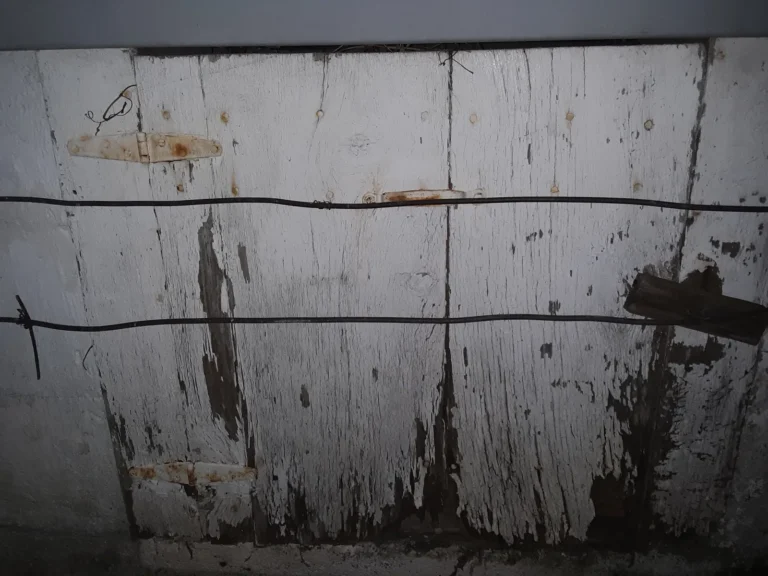
- ‘Exterior crawl space access panel on a residential foundation’ by TradeCrawlspaces via Wikimedia Commons, CC BY-SA 4.0, resized and converted to WebP.
- ‘Worker installing a moisture barrier and insulation in a residential crawl space’: U.S. Department of Energy / NREL (Dennis Schroeder) / Wikimedia Commons, public domain, resized and converted to WebP.
The bottom line
Crawl space encapsulation cost depends on what’s included before it becomes a dollar problem. Use HomeAdvisor, Angi (sister brands under Angi Inc.), This Old House, and Fixr as dated national context with each source named; rebuild decisions from line items; refuse bids that seal without water control or drying. Continue with Crawl Space Encapsulation Guide, When Not to Encapsulate a Crawl Space, Crawl Space Vapor Barrier Guide, and Crawl Space Dehumidifier Guide.