
Crawl Space Sump Pump Cost: Install vs Replacement

Published U.S. consumer guides put sump pump installation and sump pump replacement in different dollar ranges—and they rarely mean the same scope. These figures are published national ranges from named cost guides, not local quotes, and local bids vary. For how the mechanical system works, see the Crawl Space Sump Pump Guide. For the wider drainage stack, see Crawl Space Drainage and Waterproofing. If you already see standing water, start with Water in the Crawl Space: Causes and Fixes.
Each cost guide defines the job a little differently, so compare the scope, not just the number. These aren’t a survey of your neighborhood, not a local bid, and not blended into one price for this site. Encapsulation package costs appear in the Crawl Space Encapsulation Cost Guide.
Quick answer: published national ranges
| Source | Type of job | Headline range or average | Notes |
|---|---|---|---|
| HomeAdvisor | Replacement | Normal range $645–$2,120; average $1,363 (also cites lows near $280 or highs near $4,800 depending on type, location, and labor) | Straight-swap framing: pit and discharge line already in place. |
| Angi | Replacement | National average $531; most $309–$755 (based on more than 5,000 projects) | HomeAdvisor and Angi are owned by the same company, so their numbers aren’t independent. Their replacement headline ranges diverge—don’t average them into one midpoint. |
| Angi | New installation | National average $1,100; most $800–$1,500. Type table: crawl space or exterior $1,500–$4,000; battery backup add-on $1,000–$2,000; permits $50–$250 | Crawl or exterior is Angi’s type range. |
| This Old House | New installation (primary) plus replacement contrast | Installation average about $1,400; most $500–$4,000. Replacement typically $350–$1,000. Existing basin may be as little as $500; new with pit and above-ground drainage about $1,400 | On-page note: cost data sourced from Fixr and Angi unless otherwise noted. |
| Fixr | New installation (primary) plus replacement contrast | National average $1,400; average range $800–$2,000; low $500; high $4,000. Replacement $350–$1,000. Location table: crawl space installed $650–$1,500 | Aligns with This Old House’s about-$1,400 and $500–$4,000 framing. |
HomeAdvisor and Angi are owned by the same company, so their numbers aren’t independent. Overlapping install-style ranges elsewhere don’t cancel the gap between their replacement headlines—show both; don’t average them into a midpoint.
Install versus replacement (scope)
| Scope | Typical meaning on consumer cost pages | What is often already there | What is often still extra |
|---|---|---|---|
| Replacement (swap) | Remove failed pump; install new pump in the existing basin | Pit or basin, much of the discharge path | New pump, often check valve or float as needed; labor access |
| New installation | First pump at the site: excavate and set basin, connect drains and discharge, wire, commission | Little or none | Basin, gravel, discharge, electrical, permits, possible concrete cut |
| Pump into existing basin | Pump into a basin that already exists (no full dig) | Basin (and maybe some piping) | Pump and connection labor; may still need discharge or electrical |
HomeAdvisor’s $645–$2,120 or about-$1,363 range is written as a straight swap because the pit and discharge line are already in place. Angi’s separate replacement page prints a lower national average ($531; most $309–$755)—same corporate family, different published range; show both without reconciling. This Old House and Fixr state new installation is substantially more expensive than replacement (floor cutting, basin, drainage); Fixr and This Old House put replacement typically at $350–$1,000. Angi’s install page averages $1,100 (most $800–$1,500); Fixr and This Old House cluster near about $1,400 with wider high ends.
Don’t blend those rows into one crawl-space sump average.
What each source includes
Empty or “not published” cells mean that publisher did not isolate that line item—not that the item is free. Don’t assume a vapor barrier or crawl liner is inside a sump quote. See the Crawl Space Vapor Barrier Guide and the Crawl Space Encapsulation Cost Guide.
| Inclusion | HomeAdvisor replacement | Angi replacement | Angi install | This Old House | Fixr |
|---|---|---|---|---|---|
| Pit or basin | Assumed already in place for headline $1,363 or $645–$2,120. Crawl may need hand digging—no isolated new-pit dollar. Basement location $310–$750 (can approach about $1,340). | Replacement framing (existing system)—no new-basin dig package isolated on the replacement overview. | New installs may need excavation or enlarging the pit; dual pumps or multiple pits $2,000–$4,000+ in the size table. Crawl or exterior type $1,500–$4,000. | Basin labor $500–$1,200 (labor alone). New with pit and above-ground drainage about $1,400. Existing basin as little as $500. Concrete cut $2,500–$5,000. | Average $1,400 framed as new submersible plus pit plus above-ground drainage. Basin dig $500–$1,200. Low $500 = pedestal in existing pit. High $4,000 = new pit, dual pumps, underground drainage, backup, alarm, thick concrete. |
| Crawl liner or vapor barrier | Not published | Not published | Not published | Not published | Not published |
| Discharge line | Assumed already in place for a straight swap. | Pros “ensure proper installation of discharge lines” (narrative)—no isolated discharge dollar. | Upgraded discharge lines among accessories $50–$300 each (with check valves, covers). | Above-ground $150–$400; buried $250–$2,000. French drains $2,800–$6,500. | Discharge included in install narrative; bury discharge $250–$2,000; above-ground $150–$400; French drains $2,800–$6,500. |
| Check valve | Not published as a priced line. | Pros install check valves (narrative)—no isolated dollar. | Accessories including check valves $50–$300 each. | Mentions check valve in pro install—no isolated dollar. | Explains check-valve function; inspection theme—no isolated new-install dollar. |
| Battery or water-powered backup | Budget for backup and alarms—no isolated backup dollar on the overview. Maintenance up to about $250 per year. | Maintenance and inspections up to $250 per year; add-ons mentioned in next steps—no isolated backup package dollar on the replacement overview. | Battery backup add-on $1,000–$2,000; water-powered $1,200–$2,500. | Battery only $150–$250; primary plus backup $150–$2,000; water-powered $200–$900; combo $500–$1,500; primary electric $80–$1,000. | Battery backup unit $150–$2,000 (battery-only add $150–$250 in narrative); water-powered $200–$900; combo $500–$1,500; primary electric $80–$1,000. |
| Electrical | Labor $45 to $200 per hour—not a ground-fault interrupter package price. | Labor $45 to $200 per hour; replacements about 1 hour; new installs 2–4 hours. | Labor $50 to $150 per hour (minimum service from $100); electrical upgrades add labor; permits $50–$250 when electrical or drainage is involved. | Labor $300–$4,000 for pump and drainage pipes; permit if wiring changes—no ground-fault interrupter dollar. | Labor $300–$4,000; plumbers $75 to $150 per hour; permits if electrical and structural changes. |
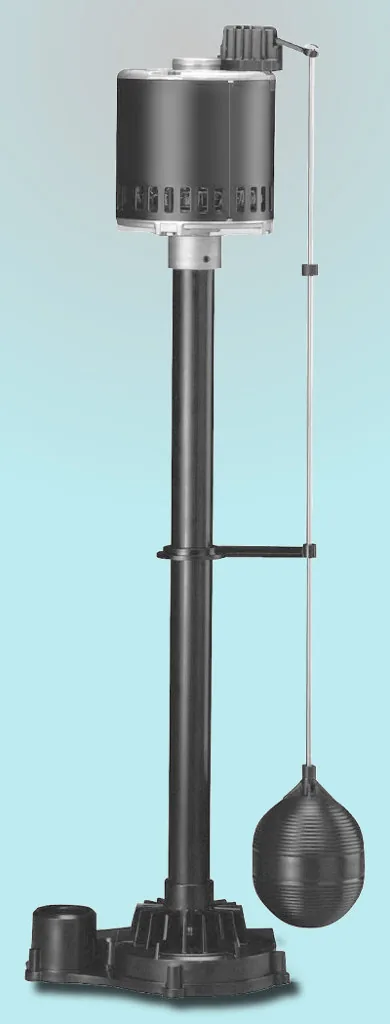
Pedestal versus submersible equipment (not full job totals): HomeAdvisor and Angi replacement pages—pedestal $60–$170; submersible $100–$400. Fixr and This Old House publish wider unit-only ranges (for example pedestal $80–$800, submersible $90–$1,000 on Fixr)—don’t merge into one equipment average.
Crawl-space cost drivers
- Access and height matter. HomeAdvisor notes crawl spaces are often 1 to 3 feet high, so pros may dig by hand and labor rises versus basement or attic work. Angi’s install type table lists crawl space or exterior at $1,500–$4,000. Fixr’s location table lists crawl-space installed at $650–$1,500—different scopes and publishers; don’t average them.
- A new pit versus a swap changes the bill. HomeAdvisor and Angi replacement averages assume an existing system; Fixr and This Old House show that new-pit and concrete work can dominate.
- The discharge path matters. Above-ground versus buried runs (This Old House and Fixr $150–$400 vs $250–$2,000), and daylight setbacks and storm-sewer rules follow the local building authority.
- Backup power is usually optional. Angi’s install add-on lists battery at $1,000–$2,000 and water-powered at $1,200–$2,500. Price backups as separate line items.
- Electrical work adds cost. New circuits, ground-fault circuit interrupters, and wet-location devices need a licensed electrician; confirm with the local building authority. Angi lists permits at $50–$250 when electrical or drainage work is involved.
- Repairs versus replace. HomeAdvisor and Angi replacement pages list repairs at $400–$550 and maintenance up to about $250 per year, and roughly a 10-year age frame for considering replacement.
- Outdoor or weather-exposed units. HomeAdvisor lists outdoor replacement at $1,250–$2,500; Fixr lists outdoor installed at $900–$1,400.
- Whole-house drainage is separate. French drains (This Old House and Fixr $2,800–$6,500) and encapsulation packages aren’t sump-only costs.
Quote-comparison checklist
- Scope = replacement versus new install versus pump into existing basin?
- Basin: existing, replace liner only, or new dig (dirt versus concrete)?
- Discharge: material, buried versus above grade, termination point, check valve included?
- Pump type and horsepower, and whether pedestal versus submersible
- Cover: mechanically attached and gasketed (soil-gas pathway; see Crawl Space Drainage and Waterproofing)
- Backup: none, battery, water-powered, or combo—and is it priced separately?
- Electrical: existing receptacle versus new circuit or ground-fault circuit interrupter, and is there an electrician allowance?
- Permits: who pulls them; what the local building authority requires
- Crawl access constraints and debris or water present (see Water in the Crawl Space: Causes and Fixes)
- Exclusions: interior perimeter drain, French drain, vapor barrier, mold, structural
- Warranty (pump versus workmanship) and who owns seasonal maintenance
Compare line items, not only bottoms.
Permits, electrical, and who should do the work
New sump wiring, ground-fault circuit interrupter protection, and wet-location devices are licensed electrician work—not a do-it-yourself “add an outlet” tip. Plumbing connections, basins cut into slabs, and discharge to storm systems often need a licensed plumber or waterproofing contractor and must follow the local building authority.
Contaminated floodwater or sewage in the pit mean safety and cleanup paths on water in the crawl space and Crawl Space Mold: What Homeowners Should Do, not a cheap pump swap. For hiring help, see How to Hire and Compare Crawl Space Contractors and the Encapsulation Quote Checklist.
The bottom line
Sump pump cost is a scope problem before it’s a midpoint problem. These are published national ranges, not quotes—local bids vary. Use HomeAdvisor’s and Angi’s separate replacement ranges (they diverge—show both) when the pit and discharge already exist; use Angi, Fixr, and This Old House install ranges when you’re digging a first basin—and read every quote for basin, discharge, check valve, backup, and electrical line items. Crawl access can raise labor. Permits and new circuits belong to licensed pros and the local building authority. For how the drainage system fits together, continue with Crawl Space Drainage and Waterproofing and the Crawl Space Sump Pump Guide.
Sources
- How Much Does Sump Pump Replacement Cost in 2026? — HomeAdvisor
- How Much Does It Cost to Replace a Sump Pump? (2026 Data) — Angi
- How Much Does Sump Pump Installation Cost? (2026 Data) — Angi
- How Much Does Sump Pump Installation Cost? (2026 Guide) — This Old House
- How much does it cost to install a sump pump? — Fixr
- SEC exhibit Nature of Operations (Angi Inc. brands) — Angi Inc.
- Sump Pump Cost — Bob Vila (older context; prefer 2025–2026 Angi / HomeAdvisor / This Old House / Fixr pages above)
Image credits
- ‘Pedestal pump’ by Hydrargyrum via Wikimedia Commons, CC BY-SA 3.0, resized and converted to WebP.