
Why a Crawl Space Dehumidifier Runs Constantly
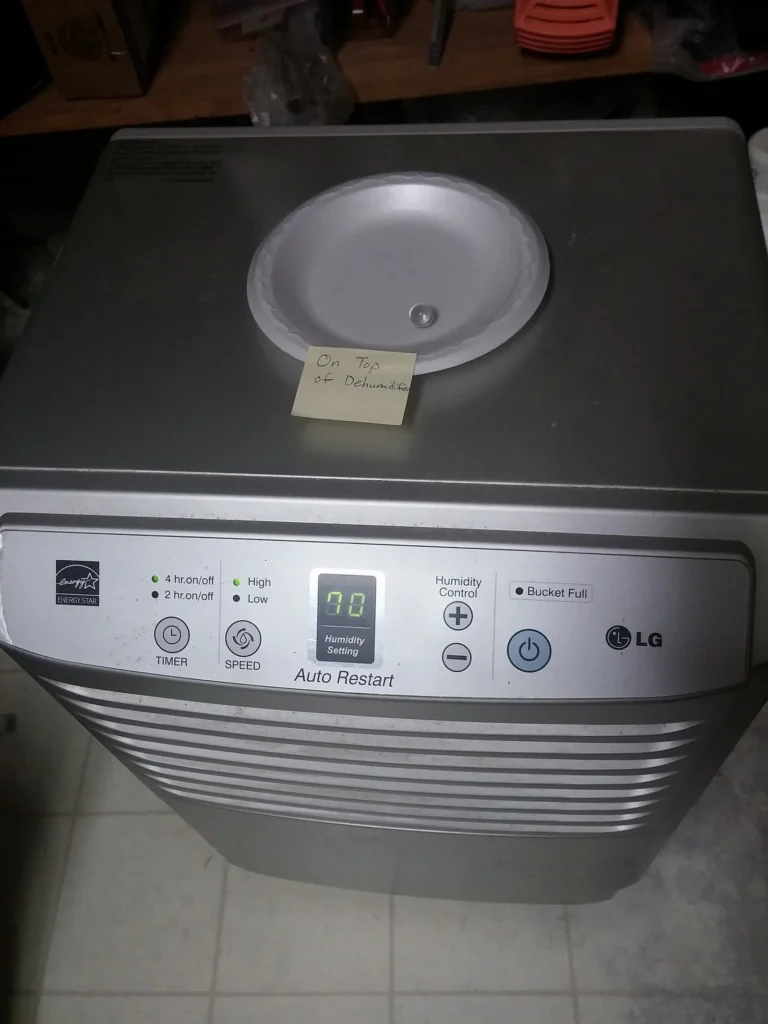

A crawl space dehumidifier that runs constantly—or never seems to keep up—is usually fighting a moisture load, an enclosure leak, a drain or frost or filter problem, or a control setting, not only “too small a machine.” Before you buy a larger unit, check whether outdoor air or liquid water is still feeding the crawl, whether the ground liner is torn, and whether the humidistat, drain, and filter are doing their jobs. For how to choose capacity and read labels, see the Crawl Space Dehumidifier Guide. For humidity targets and how to measure them, see Crawl Space Humidity and Moisture Control.
ENERGY STAR dehumidifier guidance covers how humidistat, defrost, and filter controls behave—and your unit’s own install manual will show the same controls for that model.
Safety first
- If there’s standing water, sewage, or floodwater, stay out of the crawl until it’s been pumped out and dried. Start with Water in the Crawl Space: Causes and Fixes. A dehumidifier isn’t a sump.
- ENERGY STAR advises using a grounded outlet and keeping drain water away from cords and devices. Whole-home drain routing often needs a heating and cooling professional, as ENERGY STAR notes.
- For mold, see Crawl Space Mold: What Homeowners Should Do for who should clean and who shouldn’t.
- If you suspect vermiculite or asbestos-containing material, don’t disturb it; see the Crawl Space Inspection Checklist.
What “runs constantly” can mean
| Observation | Often means |
|---|---|
| Compressor or fan rarely (or never) cycles off; relative humidity on a separate hygrometer stays high | Moisture load still exceeds removal, or the humidistat never gets satisfied |
| Fan runs a lot but little water collects; coil iced | Defrost or low-temperature behavior that ENERGY STAR and manufacturer manuals describe |
| Fan switch left on continuous circulation | Fan-only continuous run by design on some units—not the same as endless dehumidifying |
| Bucket fills, overflow shutoff, or pump fault | Drain path failure that looks like “won’t keep up” |
ENERGY STAR says all ENERGY STAR dehumidifiers include a built-in humidistat; once the space reaches the desired relative humidity, the unit cycles to maintain it. If relative humidity never reaches that setting, the machine can run for long stretches.
For example, one manufacturer’s manual (Santa Fe Classic) explains that the humidity control turns the unit on when relative humidity rises to the dial setpoint and off when relative humidity is within about ±5% of that setpoint; the dehumidifier will run continuously until relative humidity drops to the dial setting. The same manual cautions against setting the control to the driest setting in rooms under 65°F—doing so can cause long periods of ineffective run time. Approximate dial ranges in that manual are that product’s control labels, not a universal crawl setpoint—use Crawl Space Humidity and Moisture Control for target numbers.
Quick cause map
| Likely driver | What to check | Where to go next |
|---|---|---|
| Open foundation air vents or major air leaks | Outdoor air still feeding the crawl; access door leaks | How to Seal Crawl Space Vents; Vented vs Unvented Crawl Space |
| Bulk water or bad drainage | Standing water, wet soil, sump failures | Water in the Crawl Space: Causes and Fixes; Crawl Space Drainage and Waterproofing; Crawl Space Sump Pump Guide |
| Liner gaps or torn ground cover | Open soil, failed seams, missing upturns | How to Repair a Torn Crawl Space Vapor Barrier; Crawl Space Vapor Barrier Guide |
| Incomplete closed-crawl package | Sealed vents but no drying plan, or a leaky enclosure | Crawl Space Encapsulation Process; When Not to Encapsulate a Crawl Space |
| Undersized capacity for the load | Pint-per-day rating versus dampness and area; label-era confusion | Crawl Space Dehumidifier Guide; ENERGY STAR sizing chart |
| Humidistat setpoint or placement | Set unrealistically low for crawl temperature; sensor in dead air or a wet pocket | Manufacturer manual; hygrometer cross-check |
| Drain hose or pump clogged | Algae or sludge; no continuous drain; bucket full | ENERGY STAR drain options; manufacturer drain checks |
| Coil frost or low crawl temperature | Air often below about 65°F; repeated compressor short-cycling | ENERGY STAR operating-temperature guidance; manufacturer defrost |
| Dirty filter or blocked airflow | Filter overdue; intake blocked by debris | Manufacturer filter interval; ENERGY STAR placement |
1. Fix the enclosure and water first
ENERGY STAR closed-crawl design materials treat a mechanical drying system as part of a closed package—not a gadget that can outrun open vents and wet soil. In a vented crawl, continuous outdoor air can overwhelm a portable unit.
Checklist:
- Are foundation air vents still open, seasonal, or leaky? Closing or sealing is a system decision—see Vented vs Unvented Crawl Space; for a homeowner seal method and flood or combustion stops, see How to Seal Crawl Space Vents.
- Is there liquid water or chronic damp soil? See Water in the Crawl Space: Causes and Fixes and Crawl Space Drainage and Waterproofing.
- Is the ground vapor retarder torn, short, or unsealed at seams or piers? See How to Repair a Torn Crawl Space Vapor Barrier.
- Was the crawl “sealed” without a drying plan? See When Not to Encapsulate a Crawl Space and the encapsulation process.
Don’t jump to a larger dehumidifier until water and major outdoor-air paths are honest.
2. Sizing versus moisture load
ENERGY STAR’s dehumidifier product page says:
- Capacity is usually measured in pints per 24 hours at test conditions.
- Needed capacity depends on space size and how damp the space is without dehumidification.
- For portable guidance charts, it’s generally better to oversize than undersize.
- The portable test temperature moved to 65°F (from 80°F) so labels better reflect cooler basement-like conditions; shoppers may see lower pint numbers on comparable-looking models after the newer labels—compare on the current basis.
Constant runtime with a still-high hygrometer can mean the unit is right-sized for a dry enclosure but undersized for the actual leak or water load—or the reverse: a large unit stuck in defrost or starved for airflow. Capacity selection detail stays in the dehumidifier guide.
3. Setpoint, humidistat placement, and calibration
ENERGY STAR guidance includes:
- Certified units include a built-in humidistat so you can set a desired relative humidity; the unit maintains that level.
- If there’s no built-in humidistat or it doesn’t show relative humidity, consider a separate hygrometer near the unit.
- Allow airflow around the unit; keep discharge clear of walls or furniture when the design needs clearance; and close the space you intend to dry.
Don’t copy a new crawl setpoint from a website how-to. Use Crawl Space Humidity and Moisture Control for U.S. Environmental Protection Agency whole-house versus crawl numbers, and the dehumidifier guide for how those numbers relate to equipment. ENERGY STAR’s often-cited 30–50% range is building and indoor buying guidance—not automatic crawl law.
For example, one manufacturer’s manual (Santa Fe Classic) lists approximate dial ranges labeled Drier (35–45% relative humidity), Normal (45–55%, “recommended for most applications” in that manual), and Humid (55–65%); continuous run until the dial setting is met; avoid the driest setting below 65°F because of long ineffective runtime. Treat those ranges as that product’s control labels, then choose a crawl target with a pro using the humidity guide—not as a universal crawl code.
Cross-check the unit’s display against a separate hygrometer in the crawl air (not buried in a corner wet spot). If the humidistat is mounted in finished space while the crawl stays wet, the unit may stop early or run oddly—follow the manufacturer’s placement instructions for remote or dehumidistat options.
4. Drain problems that look like “always on”
ENERGY STAR notes that many portables can use a hose from the bucket to a floor drain or sump so you needn’t empty daily; most whole-home units use a drain routed to a floor drain or condensate pump, typically by a heating and cooling professional.
For example, one manufacturer’s manual (Santa Fe Classic): locate near a suitable drain; keep the hose sloping; when changing the filter, check the drain hose for algae or sludge buildup.
A clogged hose, failed pump, or full bucket with shutoff can stop effective drying while the control still “calls,” or force short cycles that never pull relative humidity down.
5. Coil icing and low crawl temperatures
ENERGY STAR advises: if the space often falls below about 65°F, consider a product specified for lower temperatures. Frost can form on condensing coils below 65°F and hurt performance by making the compressor cycle without removing moisture. If frost forms, switch the unit off and allow it to defrost before restarting; some units have an anti-frost sensor that shuts the unit down when air is too cold.
For example, one manufacturer’s manual (Santa Fe Classic): a defrost thermostat stops dehumidifying when excessive frost forms; the fan runs until normal conditions return—so long fan runtime in a cold crawl can be defrost behavior, not proof you need a larger pint rating.
Match equipment to crawl temperatures using the dehumidifier guide’s low-temp and defrost criteria.
6. Filter and airflow maintenance
ENERGY STAR advises keeping the unit away from heavy dust sources that clog coils or grills; observe manufacturer electrical warnings.
For example, one manufacturer’s manual (Santa Fe Classic): a Minimum Efficiency Reporting Value 13 filter; check or replace about every three to six months; a dirty filter reduces capacity and efficiency; turn the unit off before a filter change; don’t run without the specified filter.
Restricted airflow means less water removed and longer runtimes at the same setpoint.
When to call a heating and cooling or crawl pro
| Situation | Why |
|---|---|
| Natural-draft combustion equipment in or drawing from the crawl after sealing | Combustion-air and back-draft risk—see When Not to Encapsulate a Crawl Space and How to Seal Crawl Space Vents |
| Whole-home dehumidifier drain or duct tie-in | ENERGY STAR says a heating and cooling professional should handle many whole-home drain installs |
| Refrigerant faults, dead compressor, electrical hazards | Licensed heating and cooling help |
| Structural wetness, mold beyond homeowner limits | Crawl Space Mold: What Homeowners Should Do |
| Persistent high relative humidity after vents sealed, liner sound, drain clear, filter fresh | Load versus capacity or control diagnosis with measured data |
The bottom line
Before you buy a larger crawl dehumidifier, prove the enclosure: sealed air vents or an honest vented design, no bulk water, sound ground cover, a sensible humidistat setting for the crawl’s temperature, a clear drain, a clean filter, and frost or defrost behavior you understand. Humidity targets stay in Crawl Space Humidity and Moisture Control. Equipment criteria stay in the Crawl Space Dehumidifier Guide.
Sources
- Dehumidifiers — ENERGY STAR
- Dehumidifier Testing and Capacity — ENERGY STAR
- Designing Closed Crawlspaces — ENERGY STAR / Advanced Energy
- Santa Fe Classic Installation & Operation Instructions (TS-2053) — Therma-Stor / Santa Fe
Image credits
- ‘Dehumidifer’ by Chong Tian Lin via Wikimedia Commons, CC BY-SA 4.0, resized and converted to WebP.