
Crawl Space Inspection Checklist for Homeowners
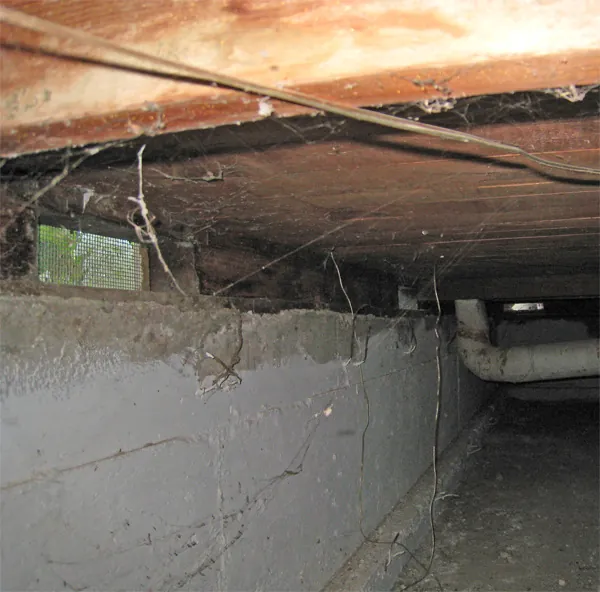

Run through these checks a few times a year—after a hard rain, when you smell mustiness, or before you hire encapsulation work. Check the box and note what you saw. The checks are based on the Building America Solution Center’s homeowner guide to crawl space moisture. It isn’t a certified home inspection. For humidity numbers see Crawl Space Humidity and Moisture Control. For standing water see Water in the Crawl Space: Causes and Fixes. For when not to seal see When Not to Encapsulate a Crawl Space.
Before you enter (gear and timing)
Timing
- [ ] If you suspect a problem (odor, noises), inspect as soon as it’s safe to do so.
- [ ] If there’s no active problem, prefer spring or fall after a significant rain so you can see water getting in.
- [ ] If the crawl has wall vents, prefer daylight so vent light helps navigation.
- [ ] Aim to look at least once a year when conditions allow.
Personal protective equipment and kit
- [ ] Full-coverage coveralls with hood
- [ ] Properly fitted half-mask respirator and safety glasses, or a full-face respirator
- [ ] Gloves; kneepads; headlamp
- [ ] Secondary battery-powered light (charged)
- [ ] Camera or phone; notepad
- [ ] Wood moisture meter; air relative humidity meter
Crawl entry is physically demanding and can take over an hour. Hire a contractor if you aren’t up to it. Don’t work alone if you can avoid it—tell someone your plan and expected return time. Mold cleanup gear (if wet or moldy materials will be handled later): the Centers for Disease Control and Prevention mold clean-up guidance calls for at least a National Institute for Occupational Safety and Health-approved N95, protective gloves, and sealing goggles; the U.S. Environmental Protection Agency Brief Guide to Mold, Moisture and Your Home lists gloves, goggles, and an N95. Higher-risk people (asthma, COPD, immune suppression) shouldn’t do mold cleanup themselves. For more detail, see Water in the Crawl Space: Causes and Fixes and Crawl Space Mold: What Homeowners Should Do.
When not to enter (safety stop)
Stop, document from a safe place, and call a pro. Don’t treat these stops as optional.
- [ ] Significant standing water in a section you’d have to crawl through — don’t enter that area; document and have water removed professionally. See Water in the Crawl Space: Causes and Fixes.
- [ ] Exposed electrical connections or wet electrical — document from afar; don’t touch wires. Wet equipment or standing water near power: follow CDC electrical-after-disaster rules (don’t enter standing water to reach the main switch)—call an electrician. See Water in the Crawl Space: Causes and Fixes.
- [ ] Sewage or contaminated floodwater — stay out; CDC and EPA floodwater contact limits. See Water in the Crawl Space: Causes and Fixes.
- [ ] Suspected asbestos or vermiculite insulation — the EPA says assume vermiculite may contain asbestos; don’t disturb it; don’t remove it yourself; use an accredited asbestos contractor if work must disturb it. Exit and leave the material alone. EPA vermiculite pages address attics and walls; apply the same leave-it-alone rules if vermiculite appears in a crawl.
- [ ] Active pests or wildlife (live animals, heavy droppings, nests in your path) — leave; call pest or wildlife control.
- [ ] Confined-space or access limits — hatch too small, clearance unsafe, you feel dizzy or short of breath, or no second person knows you’re entering — abort.
- [ ] Gasoline engines or generators near crawl openings or inside — never run generators or gasoline-powered engines in crawls or near vents. See Water in the Crawl Space: Causes and Fixes.
If any stop box is checked, skip the interior system lists until the hazard is cleared.
Exterior checklist (do this first)
- [ ] Grade slopes away from the foundation (see Water in the Crawl Space: Causes and Fixes; system design on the Crawl Space Drainage and Waterproofing Guide)
- [ ] Gutters clear; downspouts discharge away from the foundation (not toward the wall)
- [ ] Patios, walks, or drives don’t dump water at the foundation
- [ ] Foundation vents (if present): open path not packed with foam year-round unless part of a designed closed crawl (Vented vs Unvented Crawl Space)
- [ ] Window wells or areaways drain; no ponding against walls
- [ ] Visible exterior cracks or bowing — photo only; structural referral if concerning (Crawl Space Structural Warning Signs)
Water and drainage (interior)
For troubleshooting, see Water in the Crawl Space: Causes and Fixes. For system design, see the Crawl Space Drainage and Waterproofing Guide. For sump install, see Crawl Space Sump Pump Cost.
- [ ] Standing water, puddles, or mud
- [ ] Water stains or tide marks on walls or piers
- [ ] Efflorescence (white powdery deposit on masonry)
- [ ] Rusty pipes, nails, or hangers
- [ ] Sump present: basin condition; gasketed lid; discharge path away from foundation (not recycling next to the footing)
- [ ] Evidence of exterior or interior drain tile or daylight outfall (if known)
If you see free water, follow Water in the Crawl Space: Causes and Fixes or the Crawl Space Drainage and Waterproofing Guide. Don’t encapsulate over standing water—see When Not to Encapsulate a Crawl Space.
Humidity and moisture readings
For the full narrative, see Crawl Space Humidity and Moisture Control. These thresholds are Building America DIY crawl-inspection guidance, not whole-house EPA living-space bands.
- [ ] Air relative humidity measured in the crawl: note reading _____%
- [ ] Crawl air relative humidity above 70% flagged as concerning
- [ ] Wood moisture on joists or sills in several spots: note _____%
- [ ] Wood moisture content above 18% flagged as concerning
- [ ] Musty odor; visible mold or mildew on wood or insulation — see Crawl Space Mold: What Homeowners Should Do; cleanup gear per CDC and EPA above
Don’t invent a single “pass score.” Compare readings over time after rain and after dry spells (Crawl Space Humidity and Moisture Control).
Vapor barrier or ground cover
See the Crawl Space Vapor Barrier Guide.
- [ ] Ground cover present (poly or reinforced liner) or bare earth
- [ ] Coverage continuous versus large bare patches
- [ ] Seams overlapped or taped or open
- [ ] Edges turned up walls or piers or loose on soil
- [ ] Tears, gaps at piers, or missing sections
- [ ] Standing water on top of or under the liner (source control first — When Not to Encapsulate a Crawl Space, Water in the Crawl Space: Causes and Fixes)
Vents and flood openings
See Vented vs Unvented Crawl Space and When Not to Encapsulate a Crawl Space.
- [ ] Foundation air vents: clear, screened, or intentionally sealed as part of a closed-crawl plan
- [ ] Foam plugs or debris left in vents year-round without a full closed system
- [ ] Flood openings (if in a floodplain or required): present and distinct from ordinary air vents — don’t assume air vents equal flood openings (When Not to Encapsulate a Crawl Space; Federal Emergency Management Agency flood-opening guidance)
Insulation
See Insulate Crawl Space Walls or Floor? and Falling Crawl Space Insulation.
- [ ] Missing insulation (rim joists and far corners are common gaps — Building America DIY)
- [ ] Sagging, wet, or discolored batts
- [ ] Insulation used as a “belly” under floor versus wall insulation in a closed crawl — note configuration only (Vented vs Unvented Crawl Space)
- [ ] Suspected vermiculite or asbestos-containing material — don’t disturb; abort DIY contact. EPA pages cover attic and wall vermiculite; apply the same leave-it-alone rules in a crawl.
Framing and wood condition
See Crawl Space Structural Warning Signs and Crawl Space Mold: What Homeowners Should Do.
- [ ] Sagging floor joists or soft spots
- [ ] Support posts not bearing on piers
- [ ] Large cracks in wood members; sawdust (possible wood-boring insects)
- [ ] Mold or decay on joists, sills, or girders
- [ ] Soft or crushed wood at soil contact
Structural damage means a structural engineer or qualified contractor—not a vapor-barrier fix (When Not to Encapsulate a Crawl Space).
Plumbing
For leak classes, see Water in the Crawl Space: Causes and Fixes.
- [ ] Active drips at supply, drain, waste, vent, or water heater
- [ ] Stains under baths, kitchen, or laundry above
- [ ] Condensate lines dumping into the crawl
- [ ] Sewer odor or suspected sewage — plumber or remediation; don’t DIY hose-out
HVAC ducts and appliances
For drying equipment, see the Crawl Space Dehumidifier Guide. For ducts in vented versus closed crawls, see Vented vs Unvented Crawl Space.
- [ ] Ducts disconnected, kinked, sagging, or leaking
- [ ] Clothes dryer venting into the crawl — must terminate outdoors
- [ ] Open-combustion appliances in or near crawl — stop before sealing (When Not to Encapsulate a Crawl Space); combustion safety is a pro job
- [ ] Dehumidifier present (closed crawl): powered, draining correctly, not sitting in water
Electrical (observe only)
- [ ] Exposed splices, damaged cable, open junction boxes — photo from distance; don’t touch
- [ ] Extension cords as permanent power; submerged outlets — electrician
The bottom line
Walk the exterior first, then decide whether entry is safe. Log humidity and wood moisture after rain when you can. Fix liquid water and hazards before any encapsulation package. Use When Not to Encapsulate a Crawl Space as the stop list, and Crawl Space Humidity and Moisture Control for the numbers behind the checkboxes.
Sources
- Look at the Crawlspace for Moisture Issues — Building America Solution Center
- Protect Your Family from Asbestos-Contaminated Vermiculite Insulation — U.S. Environmental Protection Agency
- A Brief Guide to Mold, Moisture and Your Home — U.S. Environmental Protection Agency
- Mold Clean Up Guidelines and Recommendations — Centers for Disease Control and Prevention
- Flooding — U.S. Environmental Protection Agency
- What to Do to Protect Yourself During a Power Outage — Centers for Disease Control and Prevention
- What to Do to Protect Yourself From Electrical Hazards — Centers for Disease Control and Prevention
- Radon — U.S. Environmental Protection Agency
- Find a Radon Test Kit or Measurement and Mitigation Professional — U.S. Environmental Protection Agency
Image credits
- ‘Crawl-space-inside’: Newell Post (public domain upload) / Wikimedia Commons, public domain, resized and converted to WebP.