
Water in the Crawl Space: Causes and Fixes
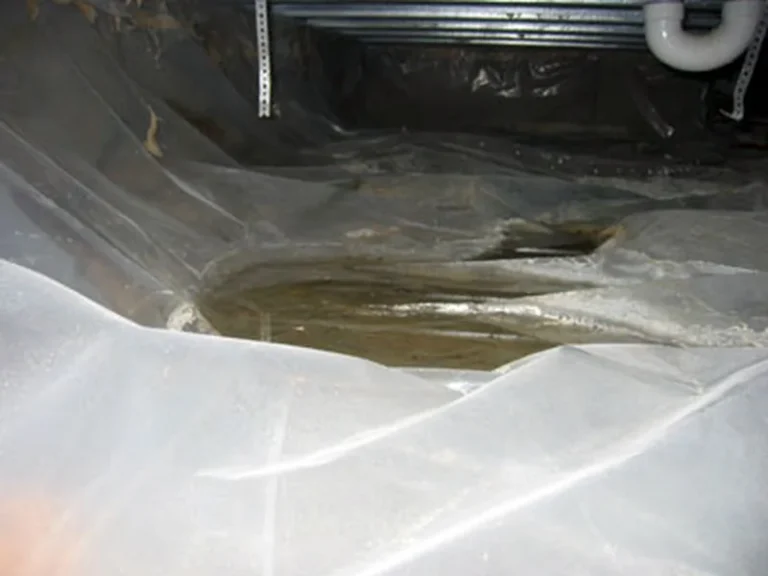

Puddles, mud, or storm water under the floor is a liquid-water problem first. A vapor barrier won’t stop it, and sealing the crawl won’t either until the water itself is under control.
Building America Solution Center water-management guidance for existing crawl floors starts with keeping rain and groundwater out—by fixing grade, gutters and downspouts, and footing drains that run to daylight or a drywell—then adding a sump where needed, and only then covering the ground. If the water keeps coming back, the Crawl Space Drainage and Waterproofing Guide covers longer-term drainage and waterproofing choices. If the air just feels damp and you don’t see free water, start with Crawl Space Humidity and Moisture Control. If someone is about to seal over standing water, read When Not to Encapsulate a Crawl Space first.
Safety first
Before you crawl in, start a pump, or “just lay plastic,” check these hazards.
Electrical
The Centers for Disease Control and Prevention warns that if circuits or equipment are wet or sitting in water, turn power off at the main breaker only if you can reach it without stepping into standing water. Don’t walk through water to reach the main switch—call an electrician. Never turn power on or off, and never use electric tools or appliances, while standing in water. Don’t restore power until a qualified electrician has inspected wet equipment. Never touch fallen power lines.
The Building America Solution Center DIY crawl inspection guidance says that if you see exposed electrical connections, document them from a safe distance and don’t touch the wires. If a section has significant standing water, don’t enter that area—photograph it and have a professional remove the water.
Contaminated floodwater and sewage
The CDC notes that floodwater can contain sewage, hazardous waste, germs, debris, and downed lines. The best protection is to stay out of the water. If you do make contact, wash with soap and clean water. If entry is unavoidable, the CDC lists rubber boots, rubber gloves, and goggles. Exposure risks include wound infections, stomach illness, and other infections—get care for concerning wounds or illness.
The U.S. Environmental Protection Agency flooding recovery guidance says to avoid or limit direct contact with contaminated flood water, wash hands often, keep children out of flood water and away from contaminated toys, and report cuts, open wounds, and illness. The EPA also flags generator carbon monoxide: never run a generator inside homes, garages, crawl spaces, sheds, or similar places—carbon monoxide can build up quickly and linger for hours.
That carbon monoxide warning applies beyond a generator sitting in the crawl. CDC power-outage safety says never use a generator, pressure washer, or any gasoline-powered engine inside your home, basement, or garage, or less than 20 feet from any window, door, or vent—even if doors and windows are open. That includes gasoline trash or utility pumps used to remove crawl water and generators staged near foundation vents or crawl access. Run outdoor-only equipment far from openings. When you must pump from under or beside the house, use electric pumps on ground-fault circuit interrupter-protected circuits installed by a qualified electrician. Symptoms of carbon monoxide poisoning include headache, dizziness, weakness, nausea, and confusion—get outdoors and call 911 or Poison Control at 1-800-222-1222.
Sewage or gray-water smells, backed-up floor drains, or known septic flooding belong with a plumber or remediation contractor—not a DIY hose-it-out-and-encapsulate job.
Mold protection after water exposure
If materials stay wet or mold is visible or suspected after the water is gone, protect your mouth, nose, skin, and eyes before cleanup:
- The CDC’s Mold Clean Up Guidelines and Recommendations say to wear at least a National Institute for Occupational Safety and Health-approved N95 respirator (a half- or full-face respirator for longer or heavier demolition); protective gloves (non-latex, vinyl, nitrile, or rubber); and goggles that seal against dust—not open-vent safety glasses. People with asthma, COPD, immune suppression, or other higher-risk conditions shouldn’t do mold cleanup themselves.
- The EPA’s A Brief Guide to Mold, Moisture and Your Home recommends cleaning with gloves, goggles, and an N95 respirator to limit breathing mold spores. Large or sewage-contaminated mold jobs remain remediation-contractor territory. Fix the water source first; don’t encapsulate over active mold or standing water. See When Not to Encapsulate a Crawl Space.
Structure and tight spaces
Undermined soil, washed footings, sagging joists, or large cracks after flooding mean stop DIY entry and call a structural professional. Crawl entry is hard work. The Building America Solution Center recommends full personal protective equipment—coveralls, a fitted respirator, eye protection, gloves, and a headlamp—for inspections when conditions are dry enough to enter safely.
What the water pattern usually means
Use what you notice to shortlist likely causes, then verify. Several problems often stack—for example, bad gutters plus a high water table.
| What you notice | Likely source | First checks you can do | Usually call |
|---|---|---|---|
| Water after rain only; wet near walls, vents, or window wells | Surface water: grade, gutters, downspouts, or slabs sloping toward the house | Walk the grade after rain; check downspout outlets; check patio and driveway slope | Landscape or waterproofing contractor if re-grade or drains are needed |
| Constant damp or water unrelated to weather; lowest spot wet | Groundwater, high water table, or missing footing drainage | Note timing versus storms; look for an existing sump and where it discharges | Waterproofing or drainage contractor; see Crawl Space Drainage and Waterproofing Guide |
| Localized wet under kitchen, bath, or laundry; or a sudden unexplained puddle | Plumbing leak (supply, drain, waste, vent, or water heater) | Meter watch with all fixtures off; listen; look for active drips at accessible pipes | Plumber |
| Wet near heating and cooling equipment or the condensate line; or musty after AC season | HVAC condensate, blocked drain, or a dryer vented into the crawl | Trace the condensate line; confirm the dryer vents outdoors | HVAC technician |
| Widespread water after a named flood or storm surge; floodplain home | Flooding or required flood openings | Don’t treat this as ordinary seepage; follow CDC and EPA safety first | Floodplain official, restoration, or structural help as needed; When Not to Encapsulate a Crawl Space |
| Wet insulation, stains, high relative humidity, little free water | Humidity or condensation (not standing water) | Hygrometer; wood moisture meter if you have one | See Crawl Space Humidity and Moisture Control and Crawl Space Dehumidifier Guide |
Don’t encapsulate over standing water. For stop conditions and combustion or flood constraints, see When Not to Encapsulate a Crawl Space.
Exterior water (grade, gutters, downspouts, slabs)
The Building America Solution Center guide Water Management of Existing Crawlspace Floor puts these steps first—before sealing or insulating a crawl:
- Re-grade so ground slopes away from the structure.
- Install or repair drainage pipes around exterior footings that drain to daylight or a drywell.
- Install or modify gutters and downspouts so they carry roof water away from the foundation.
- Ensure patios, sidewalks, and driveways slope away. If they slope toward the house, correct the slope, add drains (for example at the base of a down-sloping driveway), or replace them with correctly sloped or pervious surfaces as appropriate.
ENERGY STAR water-management builder requirements used for ENERGY STAR certification include grading bands that are useful as a design checklist—not a universal national slope law:
- Slope impermeable surfaces (patio, sidewalk, driveway, and similar) at least 0.25 inches per foot away from the home to the edge of the surface or 10 feet, whichever is less.
- For permeable surfaces, tamp back-fill and slope it at least 0.5 inches per foot away for at least 10 feet. If your lot is too tight for that, ask a drainage contractor about alternatives.
Local grading codes and soils still govern. After a rain, photograph where water ponds against the foundation; confirm downspouts discharge well away (not into window wells or against the wall); and clear clogged gutters. Heavy excavation, retaining walls, and footing-drain installs belong to contractors—system options are in the Crawl Space Drainage and Waterproofing Guide.
Plumbing and HVAC condensate
Active drips, corroded joints, water-heater overflow, or supply or drain failures create localized standing water that no yard re-grade will fix. Shut the appropriate valve if you can do so safely; call a plumber for leaks you can’t isolate. Don’t cover active leaks with plastic.
Furnaces, air handlers, and air-conditioning coils in or above the crawl can overflow when condensate lines clog. ENERGY STAR water-management builder requirements call for corrosion-resistant drain pans that drain to a conspicuous disposal point for condensate-producing components, with backflow prevention when tied to a shared drain—useful as a design checklist reminder, not a DIY wiring guide.
Building America DIY guidance explicitly flags a clothes dryer venting into the crawl as a moisture failure that can soak insulation. Confirm the dryer terminates outdoors.
Groundwater and high water table (sump preview)
When water appears in the lowest spots even with decent surface drainage—or rises with the water table after storms—the Building America Solution Center existing-crawl sequence adds sump pumps in low areas: a plastic pit often described as about 2 to 3 feet deep and perforated so rising groundwater is removed before it reaches the crawl floor, with gasketed, tight-fitting lids. Detail and system design live in the Crawl Space Drainage and Waterproofing Guide and the Building America guide Drain or Sump Pump Installed in Basements or Crawlspaces.
Homeowner points from that sump guidance (not a pump-sizing shortcut):
- Discharge to an approved location—storm sewer where permitted, dry well, or daylight away from the foundation—not next to the footing (that recycles water).
- Install a check valve on the discharge so water doesn’t flow back into the pit when the pump stops.
- Cover with a gasketed, airtight lid (an open pit is a soil-gas, radon, and vapor pathway)—aligned with ENERGY STAR sump-cover practice.
- The outlet may need ground-fault circuit interrupter protection; electrical work for new circuits is electrician territory.
- A sump alone can’t fix missing exterior drainage—source control still comes first.
Building America pre-retrofit assessment notes grade the crawl floor toward a low-spot collector (at least about 3% slope in that guidance) and consider battery backup where water tables are high. Advanced Energy materials recommend backflow protection on crawl drains and check valves on sump outflows. Confirm sump sizing and electrical rules with your local building authority. Flood-prone homes and homes in special flood hazard areas: ordinary sumps and sealed air vents don’t replace required flood openings. See When Not to Encapsulate a Crawl Space and the Federal Emergency Management Agency National Flood Insurance Program flood-opening technical bulletin.
A sensible order of work
Aligned with Building America existing-crawl water management:
- Safety — power, floodwater contamination, structural stability.
- Stop the water source — exterior grade, gutters, and slabs; plumbing; HVAC condensate; then groundwater strategy.
- Remove standing water — professional pumping when depth or electrical risk warrants; don’t DIY in significant standing water.
- Dry and assess — wood moisture and relative humidity guidance in Crawl Space Humidity and Moisture Control; mold or structure referrals as needed.
- Drainage system upgrades if source control needs them (Crawl Space Drainage and Waterproofing Guide).
- Ground vapor retarder or closed-crawl package only after liquid water is controlled (Crawl Space Vapor Barrier Guide, Crawl Space Encapsulation Guide)—and only if stop conditions clear (When Not to Encapsulate a Crawl Space).
- Mechanical drying for closed crawls (Crawl Space Dehumidifier Guide).
For drainage and sump cost ranges, see Crawl Space Sump Pump Cost. For encapsulation package ranges, see Crawl Space Encapsulation Cost Guide.
After the water is controlled
Once the crawl stays dry through wet weather:
- Install or repair a ground vapor retarder (Crawl Space Vapor Barrier Guide).
- Decide vented versus closed with eyes open (Vented vs Unvented Crawl Space).
- Encapsulation is a system after water control—not a cover over mud (Crawl Space Encapsulation Guide, When Not to Encapsulate a Crawl Space). After converting a vented crawl to a sealed one, Building America existing-crawl water-management notes recommend watching temperature, relative humidity, and wood moisture through a seasonal cycle.
When to call which pro
| Situation | Who |
|---|---|
| Wet electrical, can’t reach a dry main, burned smell or sparks | Electrician |
| Active supply or drain leak, water heater failure, sewage backup | Plumber or remediation |
| Overflowing condensate, crawl HVAC | HVAC technician |
| Re-grade, footing drains, exterior waterproofing, sump design | Waterproofing or drainage contractor (Crawl Space Drainage and Waterproofing Guide) |
| Undermined footings, sagging structure after washout | Structural engineer or qualified structural contractor |
| Named flood, special flood hazard area compliance, or flood openings | Floodplain administrator plus restoration; When Not to Encapsulate a Crawl Space |
| Chronic high relative humidity without free water | Crawl Space Humidity and Moisture Control; dehumidifier Crawl Space Dehumidifier Guide |
The bottom line
Standing water under the house means you need to stop the water at its source. Stay out of significant standing water and take electrical and floodwater hazards seriously. Fix grade, gutters, plumbing, and groundwater pathways before vapor barriers or encapsulation. For drains, dampproofing versus waterproofing, and sumps, continue to the Crawl Space Drainage and Waterproofing Guide. For when not to seal, read When Not to Encapsulate a Crawl Space. For humidity without free water, start with Crawl Space Humidity and Moisture Control.
Sources
- Water Management of Existing Crawlspace Floor — Building America Solution Center
- Look at the Crawlspace for Moisture Issues — Building America Solution Center
- Drain or Sump Pump Installed in Basements or Crawlspaces — Building America Solution Center
- Pre-Retrofit Assessment of Crawlspaces and Basements — Building America Solution Center
- National Water Management System Builder Requirements — ENERGY STAR
- What to Do to Protect Yourself From Electrical Hazards — Centers for Disease Control and Prevention
- Safety Guidelines: Floodwater — Centers for Disease Control and Prevention
- Flooding — U.S. Environmental Protection Agency
- What to Do to Protect Yourself During a Power Outage — Centers for Disease Control and Prevention
- Mold Clean Up Guidelines and Recommendations — Centers for Disease Control and Prevention
- A Brief Guide to Mold, Moisture and Your Home — U.S. Environmental Protection Agency
- NFIP Technical Bulletin 1 (March 2020) — Federal Emergency Management Agency
Image credits
- ‘Pooled water under plastic sheeting used in crawlspace’: U.S. Environmental Protection Agency / Wikimedia Commons, public domain, resized and converted to WebP.