
Crawl Space Vapor Barrier Guide: Install & Cost
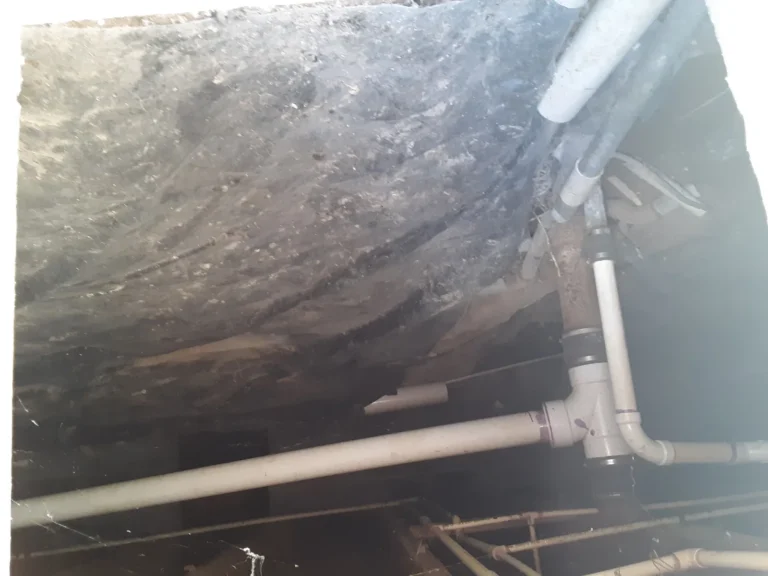

A crawl space vapor barrier (also called a ground vapor retarder) is a continuous sheet over soil—or sometimes over a slab—that slows ground moisture and many soil gases from entering the underfloor. It’s a core component of encapsulation, but barrier-only work isn’t the same as full encapsulation. For the system definition and terminology (encapsulation vs closed vs conditioned), see the Crawl Space Encapsulation Guide.
The U.S. Environmental Protection Agency moisture-control guidance recommends putting plastic over dirt in crawl spaces to limit ground moisture. Building Science Education notes that a polyethylene capillary break on the crawl floor helps whether the crawl is vented or unvented, and also helps limit soil-gas entry.
What a vapor barrier does
Soil under a crawl space evaporates moisture into the air. Without a ground cover, that vapor (and sometimes liquid water from capillary rise) loads wood, insulation, and ducts. A properly detailed polyethylene sheet:
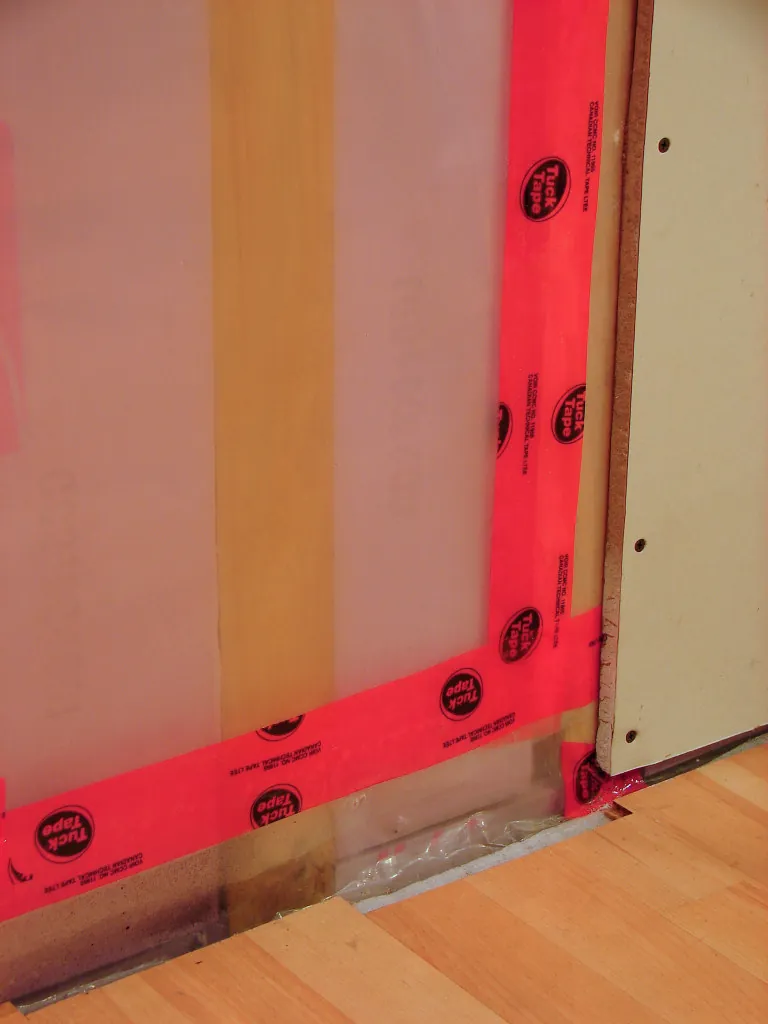
- Reduces vapor diffusion from soil into the crawl.
- Helps limit some soil gases (the U.S. Department of Energy vapor-retarder job aid notes soil gases such as radon among reasons for coverage—radon still needs testing and mitigation planning, not plastic alone).
- Creates a cleaner walking and working surface for maintenance.
It doesn’t fix yard drainage failures, standing water, or high outdoor humidity entering through open vents. Fix bulk water first with the Crawl Space Drainage and Waterproofing Guide and Water in the Crawl Space: Causes and Fixes. For humidity control after sealing, see Crawl Space Humidity and Moisture Control.
Vapor barrier vs full encapsulation
| Barrier-only | Full encapsulation (typical) | |
|---|---|---|
| Ground liner | Yes | Yes |
| Foundation vents | Often left open | Usually sealed |
| Mechanical drying | Often none | Dehumidifier or conditioned air |
| Drainage and a sump | Optional and separate | Often included when water risk remains |
| Goal | Limit ground moisture | Closed, dried underfloor |
If a contractor sells “encapsulation” but only installs ground plastic, you received a barrier package—not a closed system. For the decision overview, see the Crawl Space Encapsulation Guide. For the full system cost matrix, see the Crawl Space Encapsulation Cost Guide. When not to seal vents: When Not to Encapsulate a Crawl Space.
Material basics (thickness, reinforced liners, Class I)
Minimum thickness and perm
The U.S. Department of Energy’s Install or Repair a Crawl Space Vapor Retarder job aid directs installers to select a 6-mil minimum ground vapor retarder with a perm rating of 0.1 or less, cover as close to 100% as practical, extend at least 6 inches up walls and piers and columns, and overlap seams at least 12 inches.
Building Science Education’s capillary-break guidance likewise calls for at least 6-mil polyethylene and at least 6 inches up walls and piers. NC State Extension’s mold and moisture checklist notes that, at a minimum, crawl soil should have a 6–8 mil plastic vapor barrier covering the soil.
Thicker or reinforced liners
Many encapsulation products use 10–20 mil class reinforced polyethylene for puncture resistance (mil means 0.001 inch). That’s a durability tradeoff, not a substitute for coverage, upturns, and—where required—sealed seams.
HomeAdvisor’s encapsulation cost page lists a thick about-20-mil-class vapor-barrier material band of $0.50–$0.70 per square foot—consumer cost-guide material pricing, not a building-science thickness mandate. This Old House lists vapor-barrier materials from thinner films (about $0.05 to $0.20 per square foot) to thicker (about $0.40 to $0.60 per square foot for an about-20-mil-class product) and notes contractors often prefer at least 6 mil thick. Prefer product data sheets when specifying a branded liner.
Class I vapor retarder
“Class I” is a permeance class used in residential codes for vapor retarders. The Building America Solution Center summarizes International Residential Code vapor-retarder material classes roughly as:
| Class | Perm rating (as summarized by Building America) | Example materials |
|---|---|---|
| I | 0–0.1 perms | Sheet polyethylene; nonperforated aluminum foil |
| II | 0.1–1 perms | Kraft-faced batts; vapor-retarder paint (as specified) |
| III | 1–10 perms | Latex or enamel paint (as specified) |
The Department of Energy’s 0.1-perm spec puts the ground sheet in that Class I group.
Installation standards
Prep and drainage clearance
- Remove debris, stored items, and sharp objects that can puncture poly.
- Address standing water and site drainage before covering—don’t create a plastic bathtub (When Not to Encapsulate a Crawl Space; Building America water-management for existing crawlspace floors).
- Grade toward an intentional low point or drain when a closed-crawl design requires it (IBACOS guide practice).
- Wear personal protective equipment for crawl entry (respirator, eye protection, coveralls—see Building America DIY moisture inspection guidance) and don’t work alone if avoidable.
Upturns, seams, penetrations, piers
The Department of Energy weatherization job aid directs:
| Detail | Job-aid direction |
|---|---|
| Thickness | Minimum 6-mil; perm 0.1 or less |
| Coverage | Near 100% |
| Upturns | At least 6 inches up walls, piers, columns; securely attached |
| Seam overlap | At least 12 inches, reverse or upslope lap |
| Wall-to-floor | Wall vapor retarder under ground moisture barrier where both exist |
| Fasteners | Seal fastener penetrations with appropriate material; edge seal to foundation and supports with mastic or acoustical sealant as directed |
| Seam and penetration sealant | Durable sealant compatible with the retarder — the checklist marks this for unvented crawl spaces only |
| Drainage | Must not interfere with established drainage patterns |
Building Science Education’s capillary-break guidance for ground cover in vented or unvented crawls:
- At least 6-mil poly.
- Lap seams 6–12 inches and seal (acoustical sealant, butyl, tape, or poly patch).
- Seal around pipes from grade.
- Upturn at least 6 inches; fasten to walls and piers or stake at perimeter.
How to read the difference: Building Science Education treats sealed seams as part of a continuous capillary break in both vented and unvented crawls. The Department of Energy weatherization checklist explicitly limits the “seal seams and penetrations” checkbox to unvented crawls. For DIY and spec writing: follow the stricter sealed detailing when building toward a closed and unvented system; for vented barrier-only jobs, still cover the ground and detail upturns—confirm seam-sealing expectations with your program, contractor specs, or your local building authority rather than assuming one document overrides another.
IBACOS and Building America’s Guide to Closing and Conditioning Ventilated Crawlspaces describes closed-crawl poly practice including minimum 10-mil or puncture-resistant 6-mil cross-laminated poly, 12-inch laps taped, and sealing to walls. IBACOS’s 10-mil (or reinforced 6-mil) preference is closed-crawl guidance, not the Department of Energy weatherization 6-mil minimum. Confirm unvented-crawl vapor-retarder overlap and seal language with the International Residential Code your local building authority adopted.
Vented vs unvented sealing differences
| Topic | Vented crawl (barrier-only common) | Unvented or closed crawl |
|---|---|---|
| Ground cover | Still recommended | Required in closed-crawl designs |
| Foundation vents | Remain open to outdoors | Sealed as part of encapsulation (Crawl Space Encapsulation Guide, Vented vs Unvented Crawl Space) |
| Seam sealing | Follow Building Science Education continuous-cover practice; Department of Energy checklist doesn’t mandate the unvented sealant checkbox | Department of Energy checklist: seal seams and penetrations; closed-crawl guides emphasize taped and sealed details |
| Drying | Outdoor air plus humidity risk in humid climates | Needs mechanical drying or conditioning (Crawl Space Dehumidifier Guide) |
Cost to install a crawl space vapor barrier
These figures are published national ranges, not project quotes. They come from U.S. national consumer cost-guide pages. For the full encapsulation cost matrix, see the Crawl Space Encapsulation Cost Guide.
| What | Source | Figure (as stated) |
|---|---|---|
| Replace or install vapor barrier (labor included; about 1,500 square feet framing guidance in Fixr tables) | Fixr crawl-space repair article | $1,500–$4,000 |
| About-20-mil-class vapor barrier material per square foot | HomeAdvisor encapsulation cost page | $0.50 to $0.70 per square foot |
| Vapor barrier material by thickness | This Old House encapsulation cost page | About $0.05 to $0.20 per square foot (thinner) to about $0.40 to $0.60 per square foot (thicker about-20-mil class); tape $18–$50 |
Fixr’s barrier line isn’t always materials only. HomeAdvisor and This Old House material-per-square-foot figures exclude labor, drainage, dehumidifier, and vent sealing. HomeAdvisor and Angi are sister brands under Angi Inc.—if both appear in cost research, treat overlapping bands as related products (see the Crawl Space Encapsulation Cost Guide). Don’t average these rows into a single “true” barrier price. Example barrier-only budgets for a small dry crawl may land near Fixr’s band; wet, obstructed, or wall-covered jobs cost more.
DIY vs professional
Capable homeowners sometimes install ground poly in accessible, dry crawls. Hire professionals when you need closed-crawl sealing, electrical for drying equipment, mold remediation, structural fixes, or flood or combustion constraints. For the process overview, see the Crawl Space Encapsulation Process: Step by Step.
Safety boundaries
- Don’t cover standing water or active sewage.
- Personal protective equipment for confined, dirty spaces; electrical caution in damp areas.
- Atmospheric combustion and required flood openings can make sealing dangerous or noncompliant (When Not to Encapsulate a Crawl Space; Federal Emergency Management Agency National Flood Insurance Program flood-opening technical bulletin).
- On radon, plastic helps limit soil-gas pathways but isn’t a mitigation system—test before and after major sealing.
Estimating liner square footage
To estimate ground-cover area (floor plus upturn allowances plus overlap waste): measure length × width, add wall upturn strips (perimeter × upturn height), and add overlap waste (often tens of percent depending on seam layout)—then confirm with your material roll widths.
Repairs
Patch punctures with compatible tape and poly patches; re-secure loose upturns; replace brittle UV-damaged sheets. After other crawl work, re-inspect for new tears (IBACOS closed-crawl practice). Recurring wetness under or on the liner means the water path is unsolved—return to drainage, not thicker plastic alone.
The bottom line
A crawl space vapor barrier is the ground moisture control layer: at least 6-mil, low-perm sheet with real coverage, upturns, and careful seams—detailed more tightly when the crawl will be unvented. It’st encapsulation by itself. Get the materials and installation right first. For the full sealed-crawl system, see the Crawl Space Encapsulation Guide; see the Crawl Space Encapsulation Cost Guide for full encapsulation cost, and When Not to Encapsulate a Crawl Space before you seal vents.
Sources
- U.S. Department of Energy — Install or Repair a Crawl Space Vapor Retarder
- Building Science Education (BSES) — Crawlspace: Capillary Break at Crawlspace Floors
- Building America Solution Center — assembly note summarizing 2021 IRC vapor-retarder classes (Table R702.7(1))
- BASC — Water Management for an Existing Crawlspace Floor
- U.S. EPA — What Are the Main Ways to Control Moisture in Your Home?
- IBACOS / Building America — Guide to Closing and Conditioning Ventilated Crawlspaces
- ENERGY STAR — Basement & Crawlspace hub
- NC State Extension — Mold and Moisture Checklist
- Fixr — crawl space repair costs (vapor barrier line)
- HomeAdvisor — encapsulation cost (vapor barrier material band)
- This Old House — encapsulation cost (vapor barrier materials)
- FEMA — NFIP Technical Bulletin 1 (March 2020)
Image credits
- ‘Crawl space with a vapor barrier partly covering the dirt floor’ by TradeCrawlspaces via Wikimedia Commons, CC BY-SA 4.0, resized and converted to WebP.
- ‘Six-mil polyethylene sheet used as a vapor barrier’ by P199 via Wikimedia Commons, CC0 1.0 (public domain dedication), resized and converted to WebP.