
Crawl Space Dehumidifier Guide: Need, Size, Setup
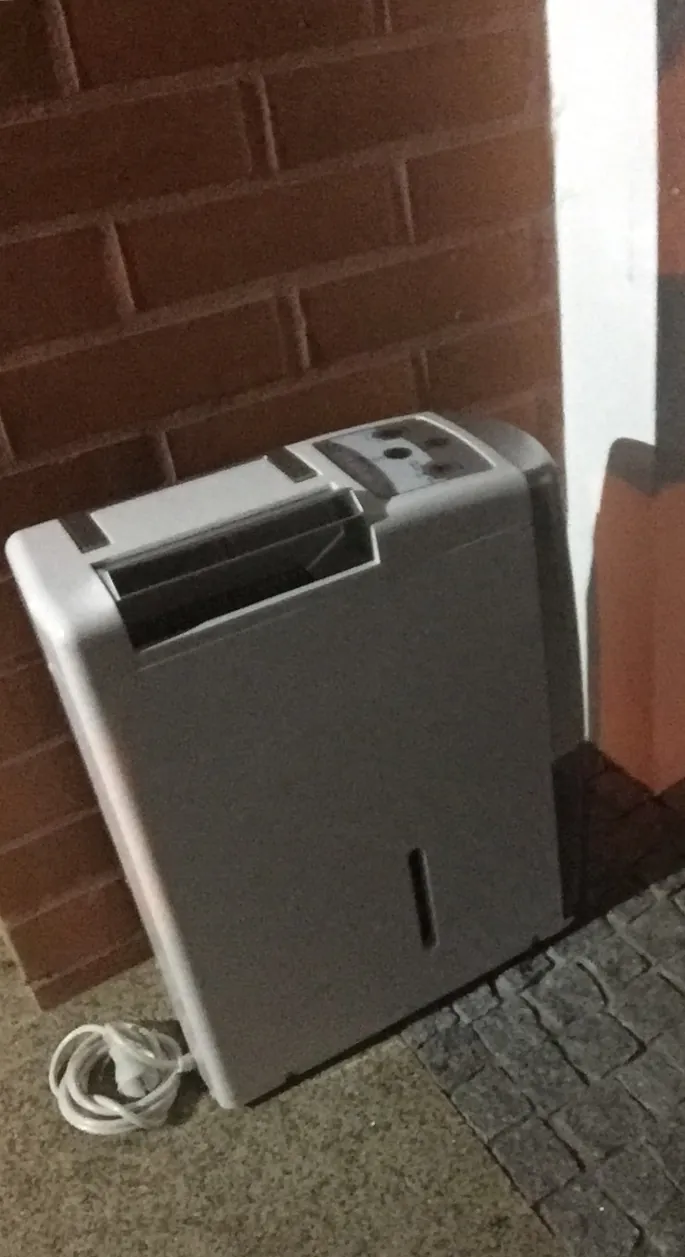

A crawl space dehumidifier removes water vapor from underfloor air. It isn’t a pump for standing water, and it isn’t a substitute for drainage or a ground vapor barrier. You’ll find when you need one, how capacity ratings work, drainage, setpoints as practice, energy metrics from ENERGY STAR and the U.S. Department of Energy, maintenance, electrical safety, and how to read “best dehumidifier” shopping content without treating review lists as picks.
Start with the Crawl Space Encapsulation Guide when sealing is on the table. Diagnose moisture with Crawl Space Humidity and Moisture Control. Cover the ground with the Crawl Space Vapor Barrier Guide.
Role versus vapor barrier versus drainage
| Control | What it does | What it doesn’t do |
|---|---|---|
| Drainage, grading, or sump | Moves liquid water away | Dry humid air by itself |
| Ground vapor barrier | Limits soil moisture and vapor into the crawl | Replace mechanical drying in a sealed crawl |
| Dehumidifier | Condenses vapor from air to a drain or bucket | Fix bulk water; safe over flooding |
Order of operations remains source control, then barrier, then seal when appropriate, then drying.
Do you need one in a sealed crawl space?
Often yes for closed and encapsulated crawls. Once foundation vents are sealed, outdoor air exchange drops and soil and enclosure moisture can still raise relative humidity. Closed-crawl design primers—including Advanced Energy material hosted on ENERGY STAR’s basement and crawl hub—treat a mechanical drying system, dehumidifier or supply of conditioned air, as part of the package, not an optional gadget.
In a vented crawl, a portable unit may still run, but continuous outdoor air can overwhelm it. Fix water first, and consider whether sealing plus drying is the right strategy. See the encapsulation guide and When Not to Encapsulate a Crawl Space.
Stop and fix the basics first. If you have standing water, open vents with no enclosure plan, or an unsealed dirt floor with active intrusion, don’t treat a pint rating as the answer. Solve water control and sealing questions first, then size equipment.
Humidity targets
| Guidance | Figure | Context |
|---|---|---|
| Indoor or whole-building range often cited | Ideally 30–50% relative humidity | ENERGY STAR dehumidifier buying guidance for buildings generally; also aligns with U.S. Environmental Protection Agency indoor mold guidance |
| Crawl inspection concern | Air relative humidity above about 70% is a warning | Building America Solution Center DIY crawl moisture guide |
| Closed-crawl design goal (practice) | Typically 70% relative humidity or lower | Advanced Energy closed-crawl recommendations |
| Research observation (not a setpoint law) | Wall-vented crawls often above 80% relative humidity much of spring and summer; closed designs held relative humidity below 65% in the same period in a Princeville, North Carolina field study. Closed crawls spent 0% of reported summer time above 80% relative humidity, and far less time above 60–70% than vented crawls | Advanced Energy closed-crawl manual |
Set a crawl humidistat with a pro after water and enclosure details are clear. Don’t treat ENERGY STAR’s 30–50% whole-building range as a crawl-space code requirement, and don’t treat a bare “about 50%” as a crawl mandate.
The U.S. Environmental Protection Agency’s indoor guidance: keep indoor relative humidity below 60%, ideally 30–50%, and dry wet materials within 24 to 48 hours when you can. That’s labeled whole-house advice, not crawl-only law. Dig into the numbers with Crawl Space Humidity and Moisture Control.
Sizing basics
How capacity is rated
- Capacity is usually stated in pints of water removed per 24 hours at test conditions.
- Needed capacity depends on space size and how damp the space is without dehumidification.
- ENERGY STAR notes it’s generally better to oversize than undersize for portable guidance charts—still not a substitute for fixing liquid water.
Why “same” units can show fewer pints
According to ENERGY STAR’s dehumidifier testing and capacity guidance:
- U.S. Department of Energy standards use Integrated Energy Factor in liters per kilowatt-hour, replacing the older Energy Factor. The newer metric includes energy when the unit has cycled off.
- Portable dehumidifiers are tested at 65°F rather than 80°F, closer to cooler basement-like conditions. Cooler air holds less moisture, so reported capacity is often lower under the newer procedure.
- Shoppers may see lower pint ratings on comparable-looking models than older labels showed. ENERGY STAR publishes an approximate old-to-new capacity correlation table; model-specific results vary, and manufacturers may provide comparisons.
The Association of Home Appliance Manufacturers industry test methods are referenced in Department of Energy rulemaking. Practical takeaway: compare labels from the same test era.
Manufacturer sizing
Crawl-specific “pint per square foot” charts on manufacturer or seller sites are manufacturer and seller guidance—cite the maker if you use them. They aren’t independent lab measurements.
Sealed versus leaky loads
Sealed and leaky loads behave differently. If standing water, open vents, or an unsealed dirt floor still apply, don’t pick a pint number yet—fix those conditions first.
Features that matter
When people shop for a crawl space dehumidifier, use a criteria checklist, not a crowned product list:
- Capacity label on the current Department of Energy and ENERGY STAR test basis (pints per day) matched to space conditions
- Continuous drain (hose to a sump or floor drain) or condensate pump—bucket-only units fail in crawls that nobody empties daily
- Humidistat with a readable relative-humidity setpoint
- Low-temperature or defrost behavior if the crawl often runs cool
- Corrosion or crawl-oriented construction as claimed on manufacturer sheets (verify, don’t invent)
- Energy metric: higher Integrated Energy Factor in liters per kilowatt-hour generally means more efficient; ENERGY STAR certified models are described as about 20% more efficient than non-certified models on that program’s page—that’s a program claim, not an independent lab result
- Service access, filter cleaning, and condensate routing you can actually maintain
No “top pick,” and no implied product tests. Brand names appear only as neutral examples—if used—not recommendations.
How to evaluate review “best of” articles
Ask whether they disclosed test methods, purchase and affiliate relationships, crawl versus basement conditions, and which capacity-label era they used. Sales rankings aren’t building-science proof. Prefer the ENERGY STAR product finder, manufacturer install manuals, and your measured relative humidity and wood moisture.
Installation and drainage basics
- Place for airflow; keep discharge clear of walls and furniture. Close the space you intend to dry.
- Route condensate to a drain or pump; keep hoses away from electrical cords; never dump near live electrical devices.
- Advanced Energy closed-crawl guidance: pipe condensate per local code to outdoors or an interior pump discharging outdoors; provide a dedicated, non-switched, ground-fault circuit interrupter-protected electrical outlet for the dehumidifier. Have an electrician confirm local electrical code.
Not for standing water removal. Pump and drain first—see Water in the Crawl Space: Causes and Fixes.
Electrical safety
- Use a properly grounded outlet; observe manufacturer warnings.
- Dedicated circuit and ground-fault circuit interrupter: follow manufacturer instructions and Advanced Energy’s closed-crawl outlet recommendation; final call is the electrician and your local building authority.
- Damp-location work is hazardous—hire licensed electrical help when in doubt.
Setpoints and runtime
Set the humidistat to a design range discussed with your contractor, anchored to:
- Stay out of the Building America Solution Center’s crawl concern zone above about 70% relative humidity when you can
- Advanced Energy closed-crawl practice: typically 70% or lower
- ENERGY STAR and U.S. Environmental Protection Agency 30–50% as whole-building indoor guidance, not automatic crawl law
Constant around-the-clock full-speed runtime often signals enclosure leaks, bulk water, undersizing, or a failed drain—not only “buy a bigger unit.”
Energy use
- ENERGY STAR: certified dehumidifiers use more efficient coils, compressors, and fans, and are stated to use about 20% less energy than similarly sized conventional units.
- On the efficiency metric—Integrated Energy Factor in liters per kilowatt-hour—higher is generally better.
Maintenance
- Clean and replace filters per the manufacturer
- Verify the condensate path after storms
- Confirm humidistat calibration against a separate hygrometer occasionally
- After power outages, confirm the unit restarted (some models need a manual reset—called out in Advanced Energy closed-crawl notes)
Alternatives to a standalone dehumidifier
Closed crawls can use other mechanical drying methods. Some state residential codes—North Carolina is one example—list options such as a permanently installed dehumidifier (one excerpt names a minimum 15 pints per day rated capacity), supply air from the dwelling air conditioner at a stated airflow rate, blowing house air with a fan, an exhaust fan, or designing the crawl as conditioned space.
Those are pathways summarized for named state code editions—not national International Residential Code law for every state. Confirm what your local building department adopted. Supply-air or conditioned-crawl concepts also appear in ENERGY STAR–hosted Advanced Energy closed-crawl design documents and Building America literature.
What it costs
Unit prices change by retailer and model. Encapsulation add-on dehumidifier ranges on consumer cost pages are listed with their publishers in the Crawl Space Encapsulation Cost Guide.
Safety and when to call a pro
- Electrical in damp crawls
- Mold and structural issues—start with Crawl Space Mold: What Homeowners Should Do if you see growth on the wood
- Combustion appliances before sealing—see When Not to Encapsulate a Crawl Space
- Flood openings or mapped flood hazard areas—check Federal Emergency Management Agency flood-opening guidance and your floodplain official
Educational only—not a substitute for licensed heating, ventilation, and air conditioning, electrical, or building officials.
The bottom line
Choose a crawl space dehumidifier with a clear understanding of capacity labels, continuous drainage, and a setpoint grounded in crawl concern thresholds—after water control and barrier and seal decisions. Use criteria, not crowning lists. Diagnose with Crawl Space Humidity and Moisture Control, and get the enclosure right with the Crawl Space Encapsulation Guide and the Crawl Space Vapor Barrier Guide before you chase a bigger pint rating.
Sources
- ENERGY STAR — Dehumidifiers (capacity chart, IEF, placement, humidistat, ~20% efficiency claim, 30–50% building RH band)
- ENERGY STAR — Dehumidifier Testing and Capacity (DOE June 2019 IEF; 65°F portable test; 2020 capacity label changes)
- ENERGY STAR asset — Designing Closed Crawlspaces
- Advanced Energy — Closed crawl spaces manual (Princeville field study: vented often >80% RH spring and summer; closed below 65% same period; summer threshold tables; typically 70% RH or lower design goal; 15 pint per day example; dedicated GFCI outlet)
- U.S. EPA — A Brief Guide to Mold, Moisture and Your Home
- BASC — Look at the Crawlspace for Moisture Issues
- NC OSFM — Closed crawl moisture control / R409.5 interpretation (dehumidifier method excerpt; 2012 NC Residential Code header on document)
- NC OSFM — Permit required for closed crawl space (references 2018 NCRC R409.5 methods)
- Advanced Energy crawl spaces hub
- FEMA — NFIP TB-1 (March 2020)
Image credits
- ‘Portable dehumidifier appliance’ by V.B.Speranza via Wikimedia Commons, CC BY-SA 4.0, resized and converted to WebP.